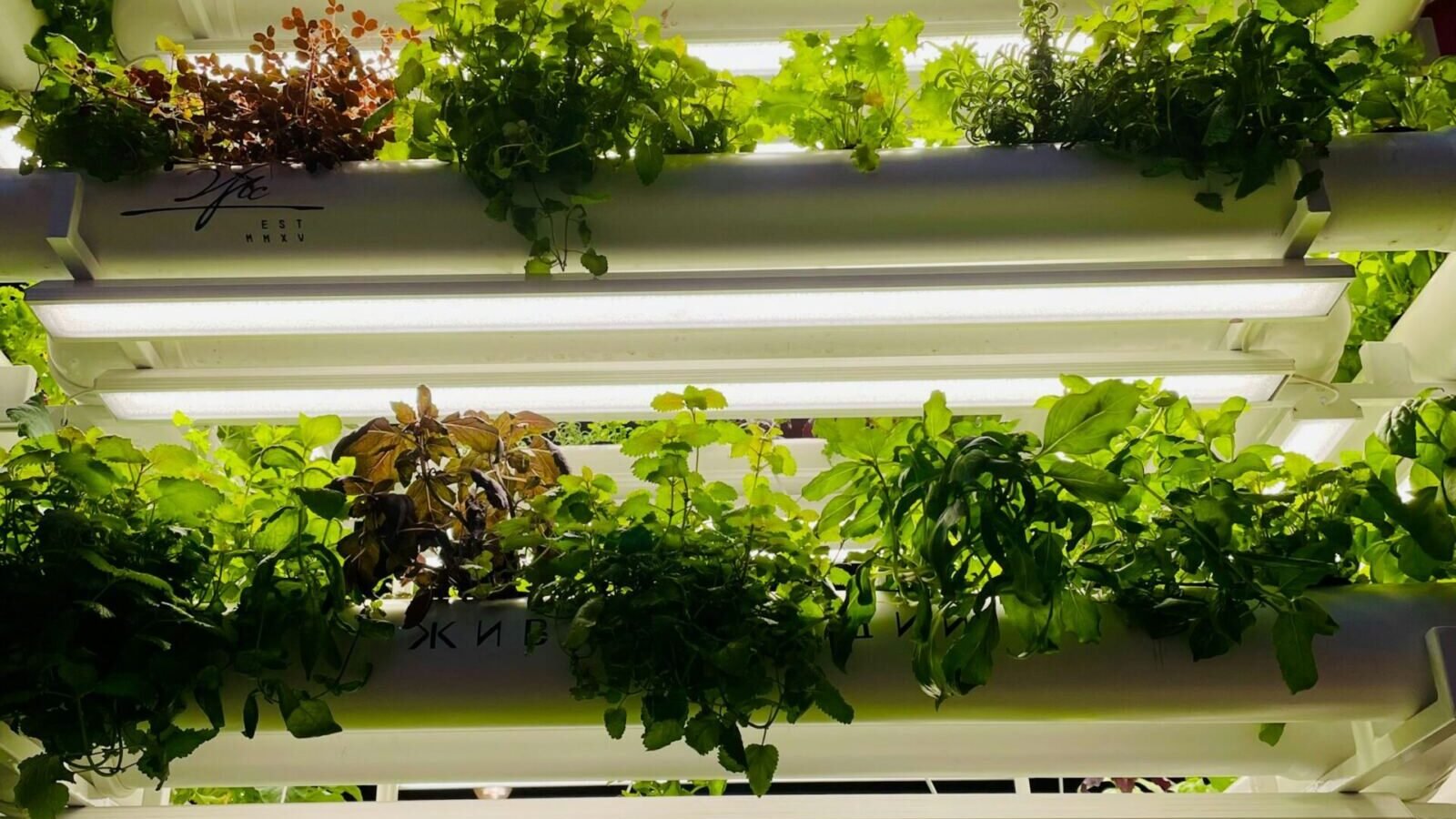
Vertical Garden Ideas for Small Spaces
15 practical vertical garden ideas for small spaces, compared by cost, sunlight, and difficulty, with a decision table, a realistic budget example, and troubleshooting for the problems that actually come up.
Table of Contents
- Quick Answer
- What You Need to Know Before You Start
- 15 Vertical Garden Ideas for Small Spaces
- Comparing the Main Vertical Garden Systems
- Which Vertical Garden Idea Is Right for You?
- What We’d Choose for Common Situations
- A Realistic Example
- Best Plants for Vertical Growing, by Sunlight and Space
- Step-by-Step: Setting Up a Wall-Mounted Pocket Planter
- Common Problems and How to Fix Them
- Mistakes We’d Avoid
- Maintenance
- Frequently Asked Questions
- Suggested Visuals for the Remaining Ideas
- Final Takeaway
The short answer
The best vertical garden ideas for small spaces are wall mounted pocket planters, trellises with climbers, tiered and ladder planters, hanging baskets, railing boxes, and repurposed pallets. Each turns an unused vertical surface into planting area without giving up floor space. Watering access and wall weight limits decide which one suits your site.
A vertical garden solves the one problem every small yard, balcony, or courtyard shares: there’s plenty of air, but almost no ground. Growing upward instead of outward turns a fence, wall, railing, or even a doorway into usable planting space without giving up any floor area. Below are 15 practical vertical garden ideas, what each one actually costs and requires, and the setup details that determine whether one thrives or fails within a season.
Quick Answer
For most small spaces, a wall-mounted pocket planter is the easiest and most flexible starting point — it needs no permanent structural changes, works on rented property, and suits shallow-rooted plants like herbs, lettuce, and strawberries. If you already have a fence or railing and want to grow climbing vegetables or flowers, a trellis paired with a ground-level planter is usually cheaper and lower-maintenance. Freestanding tiered planters work best where you can’t attach anything to a wall at all, and if you want something more permanent and ornamental, espalier or a living wall panel are the higher-effort, longer-payoff options below.
What You Need to Know Before You Start
Sun exposure changes with height and system type
A wall that gets full sun at the top can be partly shaded near the ground by the tiers or pockets above it. When laying out a tiered system, place sun-loving plants on the upper levels and more shade-tolerant options lower down. Before choosing a spot, watch it for a full day if you can — many walls that look sunny at midday are shaded for hours in the morning or evening.
Vertical systems dry out faster than beds or standard pots
Wall-mounted planters and hanging systems hold less soil volume per plant and expose more surface area to air movement, so they lose moisture faster than an equivalent in-ground bed. The University of Minnesota Extension specifically recommends drip irrigation or self-watering planters for vertical systems to maintain consistent moisture, rather than relying on manual watering alone.
Structural weight is the most overlooked factor
Wet soil is heavy — a fully watered pocket panel or tiered planter can weigh several times what it does dry. Before mounting anything to a fence or wall, confirm the structure can support the fully watered weight long-term, not just the empty planter. This is the most common reason wall-mounted systems fail months after installation, not a plant or watering problem.
Wet soil is heavy — confirm the wall can take the fully watered weight before you hang anything on it.
Your climate and hardiness zone still apply
A vertical system doesn’t change what your climate will support. Herbs and leafy greens that thrive in a cool-summer coastal climate may bolt quickly in a hot inland zone at the same time of year, regardless of the growing system. Choose plants suited to your USDA hardiness zone and local summer temperatures first, then decide how to grow them vertically.
15 Vertical Garden Ideas for Small Spaces
1. Wall-Mounted Pocket Planters
- Best for: renters, herbs, shallow-rooted edibles
- Space: any flat wall, fence, or railing section
- Sunlight: 4–6+ hours for most edible pockets
- Plants: thyme, chives, lettuce, strawberries
- Difficulty / Cost: Easy / Low–Medium
Pros: no permanent changes, works on rentals. Cons: dries out fastest of any system here. Tip: choose felt or canvas pockets over solid plastic — fabric drains and holds moisture more evenly.
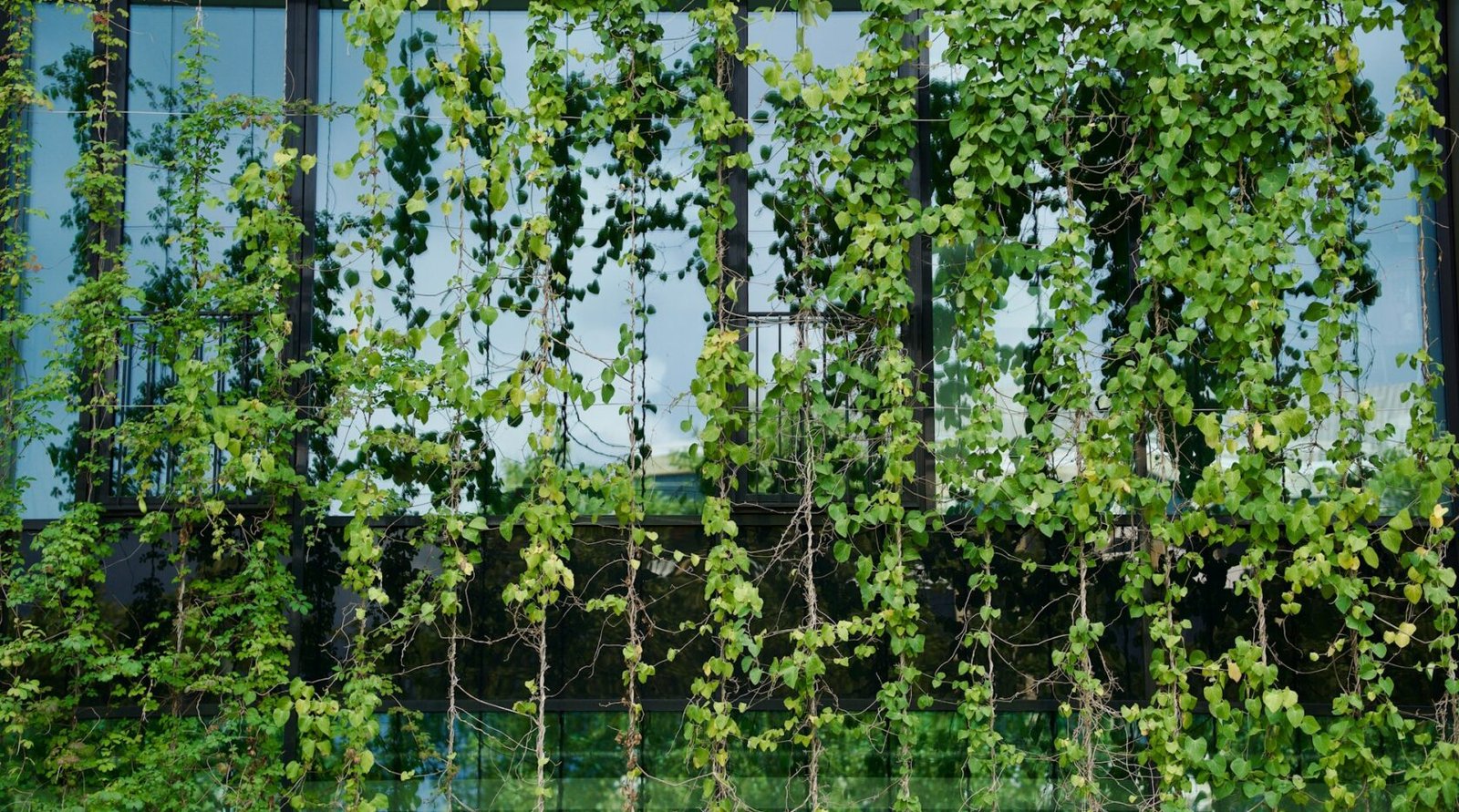
Dense wall-mounted greenery around a window — the kind of coverage a well-watered pocket panel builds toward.
2. Trellis + Ground-Level Planter
- Best for: climbing vegetables and flowering vines
- Space: a narrow bed or large planter at the base of a fence
- Sunlight: 6+ hours for most fruiting vines
- Plants: pole beans, peas, cucumbers, clematis
- Difficulty / Cost: Easy / Low
Pros: cheapest option that scales to a full fence line. Cons: only works for plants that actually climb. Tip: install the trellis before planting, not after — retrofitting around an established vine damages roots.
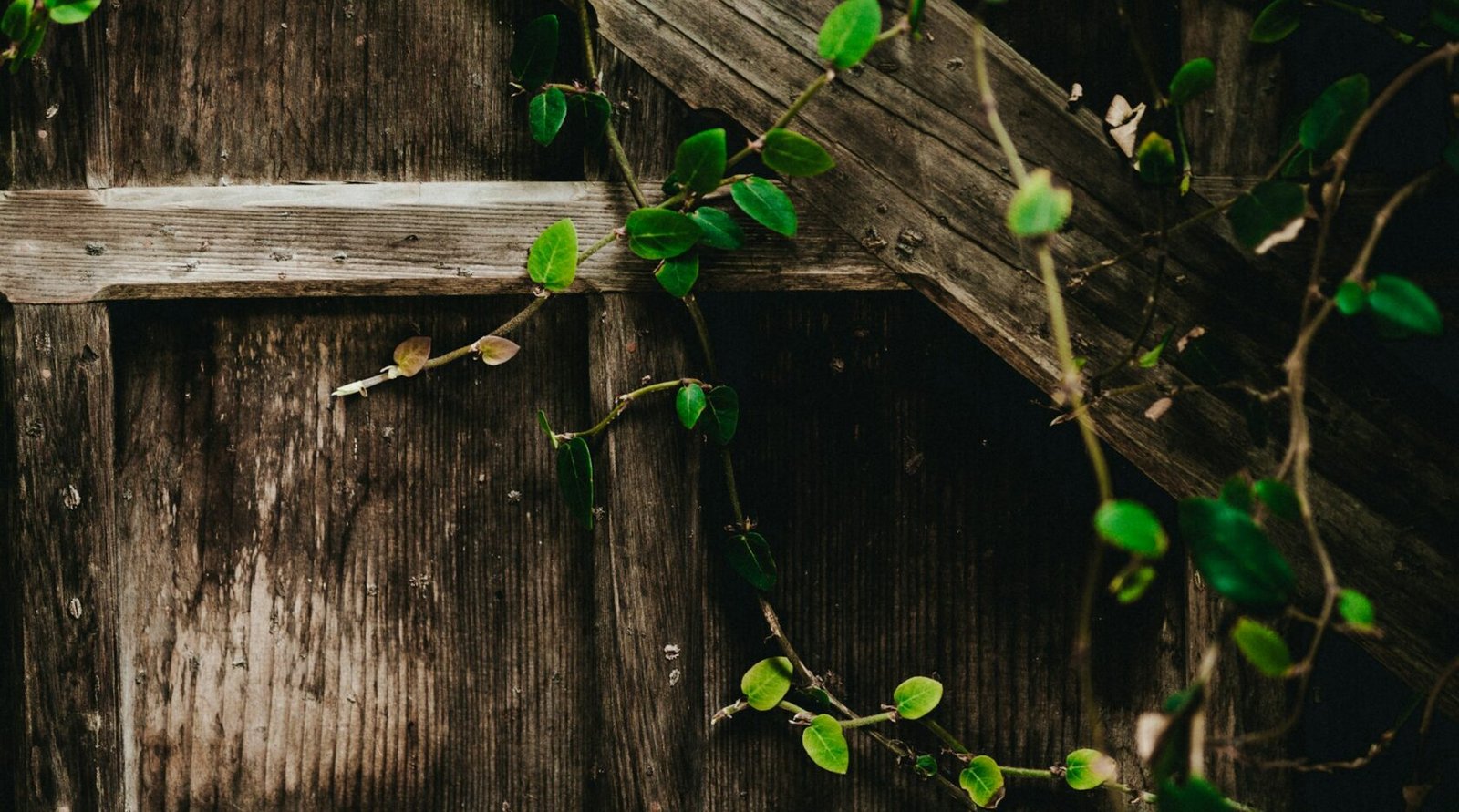
A climbing vine trained up a trellis against a wall — the cheapest option here once the vine is established.
3. Tiered or Stacked Planter Towers
- Best for: balconies and patios with no wall access
- Space: roughly 2×2 ft of floor footprint
- Sunlight: varies by tier — top tier gets more than the bottom
- Plants: strawberries, lettuce, trailing herbs
- Difficulty / Cost: Moderate / Medium–High
Pros: freestanding, no drilling required. Cons: lower tiers get shaded by upper ones. Tip: rotate the whole tower a quarter turn every week or two so no single side stays permanently shaded.
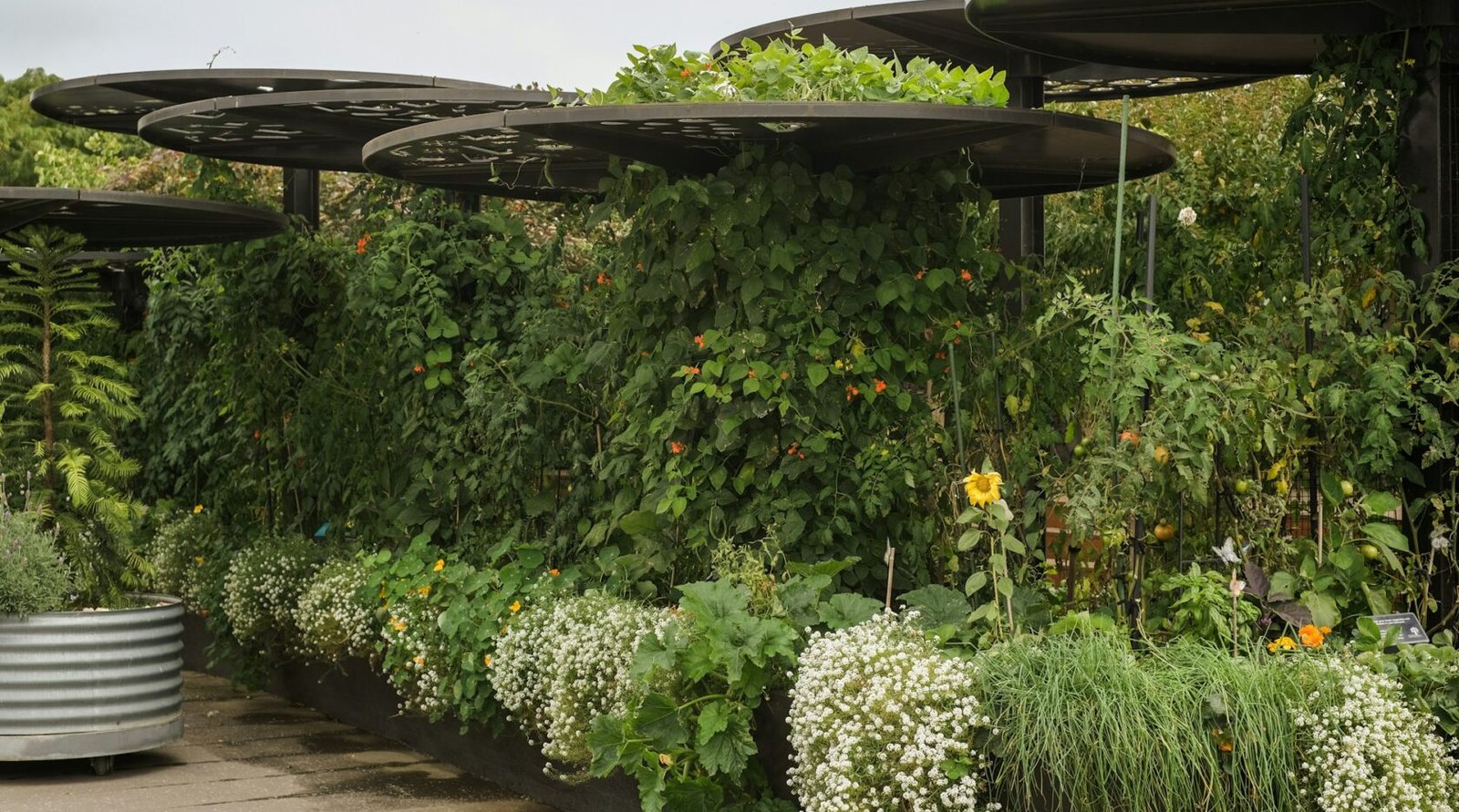
Potted plants staged at different heights on a small patio — the same shading principle applies to a freestanding tiered tower.
4. Repurposed Pallet Planter
- Best for: budget builds, one-off feature walls
- Space: a standard pallet footprint, stood on end
- Sunlight: depends on placement; suits most conditions
- Plants: shallow-rooted herbs, succulents, annuals
- Difficulty / Cost: Moderate (build time) / Very Low
Pros: often free or near-free to build. Cons: untreated wood degrades faster outdoors, especially in wet climates. Tip: line the back and base with landscape fabric before adding soil so it doesn’t wash straight through the slats.
5. Hanging Basket Rows
- Best for: porches, pergolas, anywhere with an overhead beam
- Space: vertical air space, zero floor footprint
- Sunlight: matches whatever the overhang location gets
- Plants: trailing petunias, lobelia, fuchsias, ivy
- Difficulty / Cost: Easy / Low–Medium
Pros: genuinely zero ground footprint. Cons: baskets dry out quickly and drip when watered. Tip: use a saucer or self-watering basket insert to catch runoff over patios or walkways.
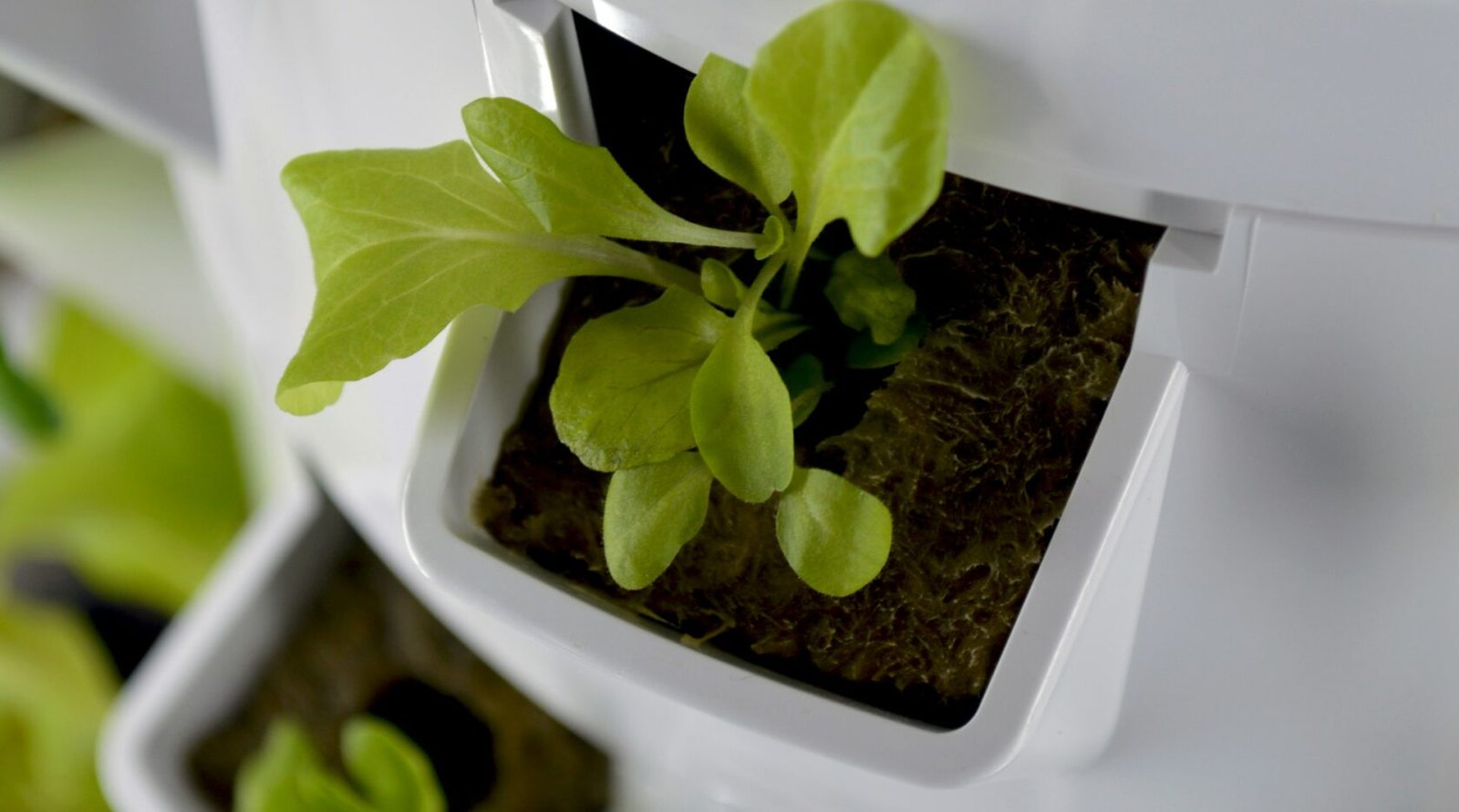
Plants staged at different heights in hanging containers — the layout logic behind a row of hanging baskets.
6. Ladder Shelf Plant Stand
- Best for: potted plant collections that need better sun exposure
- Space: roughly 18–24 inches of floor width
- Sunlight: depends on placement; good for mixed light needs across shelves
- Plants: any potted plant — this is furniture, not a planting system
- Difficulty / Cost: Easy (buy) or Moderate (build) / Low–Medium
Pros: flexible, easy to rearrange or move indoors for winter. Cons: still relies on individual pots drying out at different rates. Tip: put the thirstiest plants on the bottom shelf, closest to eye level, so you notice dry soil sooner.
7. Gutter Planters Mounted in Rows
- Best for: shallow-rooted greens along a fence or shed wall
- Space: any horizontal wall run
- Sunlight: 4–6 hours for most leafy greens
- Plants: lettuce, spinach, strawberries
- Difficulty / Cost: Moderate (install) / Low
Pros: long, narrow footprint fits where a full bed can’t. Cons: shallow depth limits plant choice; drainage holes are essential and easy to skip. Tip: drill drainage holes every 6–8 inches before mounting — gutters hold water far longer than a standard planter without them.
8. PVC Pipe Vertical Planter
- Best for: strawberries and small herbs in a narrow footprint
- Space: a single vertical pipe, minimal footprint
- Sunlight: 6+ hours ideally, since exposed pipe heats up
- Plants: strawberries, small herbs
- Difficulty / Cost: Moderate (build) / Low
Pros: very cheap, compact footprint. Cons: dark PVC in full sun can overheat roots in hot climates. Tip: use light-colored or painted pipe in hot-summer regions, and add a central watering tube so water reaches the bottom planting holes, not just the top.
9. Cinder Block Stacked Planter Wall
- Best for: a low, sturdy planting wall along a patio edge
- Space: works as a short retaining-style wall, several feet long
- Sunlight: depends on placement
- Plants: succulents, herbs, trailing annuals
- Difficulty / Cost: Moderate (heavy to build) / Low
Pros: extremely durable, weatherproof. Cons: concrete can leach lime and raise soil pH over time, which matters for acid-loving plants. Tip: stick to herbs and ornamentals rather than edibles if you’re concerned about long-term leaching, or line block cavities with a liner.
10. Over-Rail or Over-Door Pocket Organizer
- Best for: apartment balconies with a solid railing, no drilling allowed
- Space: hangs over an existing rail or door
- Sunlight: whatever the railing location gets
- Plants: herbs, small lettuces, succulents
- Difficulty / Cost: Easy / Very Low
Pros: zero permanent mounting, fully reversible — ideal for strict rental rules. Cons: exposed to more wind and temperature swings than a wall-mounted version. Tip: check the rail’s weight rating before loading a full row of filled pockets; not all railings are built to take hanging loads.
11. A-Frame Freestanding Planter
- Best for: patios where you want a feature piece rather than a wall treatment
- Space: roughly 3×3 ft footprint
- Sunlight: both sides get sun at different times of day
- Plants: mixed herbs, strawberries, trailing annuals
- Difficulty / Cost: Moderate / Medium
Pros: plants on both sides double growing space per footprint. Cons: one side is often shadier than the other, so growth can be uneven. Tip: orient the frame so its long axis runs east–west, giving both sides a fairer share of direct sun.
12. Macramé or Rope Hanging Planters
- Best for: a single accent plant near a window or porch corner
- Space: a single ceiling or bracket hook
- Sunlight: matches the hook location
- Plants: pothos, spider plant, string of pearls
- Difficulty / Cost: Easy / Low
Pros: decorative, minimal footprint, works indoors or out. Cons: holds only one plant per hanger — not a serious growing method on its own. Tip: use a pot with its own saucer; rope hangers are notorious for dripping onto floors and furniture below.
13. Stacked Window Box Tiers
- Best for: a wall beneath an existing window box, for extra planting depth
- Space: the width of the wall section below a window
- Sunlight: matches the window’s exposure
- Plants: trailing annuals, herbs, small lettuces
- Difficulty / Cost: Moderate (mounting) / Medium
Pros: extends an existing feature rather than starting from scratch. Cons: each box needs independent, secure mounting — don’t rest one box’s weight on the box below it. Tip: stagger boxes with a few inches of gap between tiers so upper-tier drainage doesn’t run directly into the box below.
14. Espalier (Trained Fruit Trees or Shrubs)
- Best for: growing fruit against a sunny wall or fence with almost no depth
- Space: a long, flat sunny wall; needs very little depth (12–18 inches)
- Sunlight: 6+ hours, ideally a south-facing wall
- Plants: apple, pear, or fig trained on dwarfing rootstock
- Difficulty / Cost: Hard (multi-year training) / Medium–High
Pros: the only idea on this list that produces real tree fruit in a genuinely narrow space. Cons: takes several years to fully train and fill out; requires annual pruning discipline. Tip: start with a young whip (unbranched tree) rather than an already-branched one — it’s far easier to train into a flat shape from the start than to correct later.
15. Living Wall Panel (Modular Green Wall)
- Best for: a dense, fully covered ornamental wall feature
- Space: any wall section; modular panels connect to scale up
- Sunlight: varies by plant selection — shade-tolerant panels exist
- Plants: ferns, pothos, mixed foliage plants (often chosen for shade)
- Difficulty / Cost: Hard (irrigation setup) / High
Pros: the most complete, densely covered look of any option here. Cons: typically needs a built-in irrigation line to keep dozens of small cells watered evenly — not realistic with hand watering alone. Tip: this is the one idea on the list where hiring an installer for the irrigation portion is usually worth it, even for an otherwise DIY project.
Comparing the Main Vertical Garden Systems
| System | Cost | Difficulty | Watering Needs | Space Saving | Best For | Main Drawback |
|---|---|---|---|---|---|---|
| Wall-mounted pocket planters | Low–Medium | Easy | Daily in warm weather | Excellent — zero floor footprint | Renters, herbs, shallow-rooted edibles | Dries out fastest; needs a sturdy wall |
| Trellis + ground planter | Low | Easy | Moderate once established | Good — small bed footprint, tall coverage | Climbing vegetables, flowering vines | Only works for climbing/vining plants |
| Tiered/stacked planters | Medium–High | Moderate | Moderate to frequent | Moderate — uses floor space, but multiplies it | Balconies, patios, no-wall situations | Takes floor footprint; lower tiers get shaded |
| Repurposed pallets | Very Low | Moderate (build time) | Daily in warm weather | Good — small footprint, stood on end | Budget builds, shallow-rooted plants | Wood degrades faster outdoors; uneven drainage |
Which Vertical Garden Idea Is Right for You?
| Your Situation | Best Idea(s) | Why |
|---|---|---|
| Renting, can’t drill into walls | Over-rail organizer, hanging baskets, ladder shelf | Fully reversible, no permanent mounting |
| Want to grow real food, not just herbs | Trellis + planter, gutter planters, PVC pipe | Enough soil depth and light for productive edibles |
| Tightest possible budget | Repurposed pallet, PVC pipe, trellis + planter | Built from cheap or free materials |
| No wall or fence at all, patio only | Tiered planter tower, A-frame planter | Fully freestanding |
| Want fruit, not just vegetables or herbs | Espalier | Only option here that produces tree fruit in minimal depth |
| Want a dense, fully finished ornamental look | Living wall panel | Highest coverage and visual impact, at the highest cost/effort |
| Shaded balcony or courtyard | Macramé hangers, living wall panel (shade mix) | Both accommodate shade-tolerant foliage plants |
| Tiny backyard, existing fence line | Trellis + planter, espalier | Uses a boundary you already have instead of adding new structure |
| Sunny wall, want herbs or edibles | Pocket planters, gutter planters, PVC pipe | Full sun suits fast-drying, shallow-soil systems |
| Shady wall, no direct sun | Living wall panel (shade mix), ladder shelf with foliage plants | Avoids forcing sun-loving plants into a spot that can’t support them |
| Want a privacy screen, not just planting | Trellis + planter (dense vine), espalier along a boundary | Only options here that build real height and coverage over a season or more |
What We’d Choose for Common Situations
The table above narrows the field; here’s a more direct call for the situations we get asked about most often.
- Apartment balcony, want it done this weekend: an over-rail pocket organizer. It needs no tools, no drilling, and no landlord conversation.
- Renting a house with a usable fence: trellis plus a ground planter. It’s the cheapest option that still scales to a full fence line, and it comes down cleanly if you move.
- Tiny backyard with a sunny fence and room for a long-term project: espalier, if you’re willing to commit several years to training it. If not, the trellis-and-planter combination gives most of the visual payoff without the multi-year wait.
- Sunny wall, want a real herb supply, not just a few pots: gutter planters mounted in a row. More usable soil depth than pockets, and a long horizontal run makes better use of a full wall than a single panel does.
- Shady wall, want it to still look intentional: a living wall panel planted with a shade-tolerant mix, or foliage plants on a ladder shelf if the budget doesn’t stretch to a panel and irrigation line.
A Realistic Example
Say you have a 30-square-foot balcony that faces south, gets roughly six hours of direct sun, and has a railing you’re allowed to attach lightweight fixtures to. A single 12-pocket felt panel (roughly 24 by 42 inches) mounted on the sunniest railing section, planted with a mix of herbs and one trailing strawberry variety per pocket, is a realistic starting project — no permanent structural changes, moderate cost, and a footprint that leaves the rest of the balcony free. In that scenario, a bulkier tiered planter would likely be overkill; the pocket panel makes better use of the vertical rail space you already have.
Approximate cost range: a 12-pocket felt panel typically runs $25–$60, plus $10–$20 for potting mix and a few dollars per starter plant — a full first setup is realistically achievable for well under $100. Maintenance: daily moisture checks in warm weather, a diluted liquid feed every 2–4 weeks during the growing season, and panel replacement every 2–4 years as the fabric breaks down outdoors.
A full first setup — panel, potting mix, and starter plants — is realistically achievable for well under $100.
Best Plants for Vertical Growing, by Sunlight and Space
Full sun (6+ hours), shallow soil (pockets, gutters, PVC pipe)
Thyme, oregano, strawberries, trailing petunias — all tolerate the faster drying and shallow root run of these systems.
Full sun, deeper soil (trellis + planter, A-frame, cinder block)
Pole beans, peas, cucumbers, nasturtiums — vining and larger plants that need more root space than a shallow pocket provides.
Partial shade
Lettuce, spinach, and most leafy greens tolerate 4–6 hours of sun and actually benefit from afternoon shade in hot climates, where full sun can trigger bolting and bitterness.
Low light / shaded corners
Ferns, pothos, and other foliage-first plants are the realistic choice for macramé hangers or living wall sections that don’t get direct sun — don’t force flowering or fruiting plants into a shaded spot expecting good results.
Avoid deep-rooted vegetables like carrots or potatoes in any shallow wall-mounted system — pockets, gutters, and PVC pipes don’t offer enough soil depth for them to develop properly. For those, a ground-level trellis planter or a dedicated bed is a better fit; see our raised-bed lettuce guide for a related shallow-bed growing comparison.
Step-by-Step: Setting Up a Wall-Mounted Pocket Planter
Tools and materials
- Felt or heavy-canvas pocket panel (fabric pockets drain and hold moisture more evenly than solid plastic pockets)
- Wall anchors or hooks rated for the panel’s fully watered weight
- Well-draining potting mix (not garden soil, which compacts and drains poorly in shallow pockets)
- Watering can with a narrow spout, or a small drip irrigation kit
Steps
- Check the mounting surface. Confirm the wall, fence, or railing can bear the panel’s fully watered weight, not just its dry weight. On drywall, this means locating a stud or using anchors rated for the full load — a screw into drywall alone isn’t enough once the panel is soaked.
- Mount securely at a comfortable working height, roughly chest to shoulder height, so you can water and check plants without a ladder or bending down.
- Fill each pocket with potting mix, leaving about half an inch of room at the top so water doesn’t run straight off during watering.
- Plant one specimen per pocket rather than crowding several in — crowded pockets compete for the limited root space and generally perform worse, not better. If you’re starting from small nursery starts rather than seed, gently loosen the root ball before placing it in the pocket.
- Water from the top down, checking that lower pockets aren’t left dry while upper ones are saturated — a common unevenness in gravity-fed systems. Water slowly enough that each pocket has time to absorb before moving to the next.
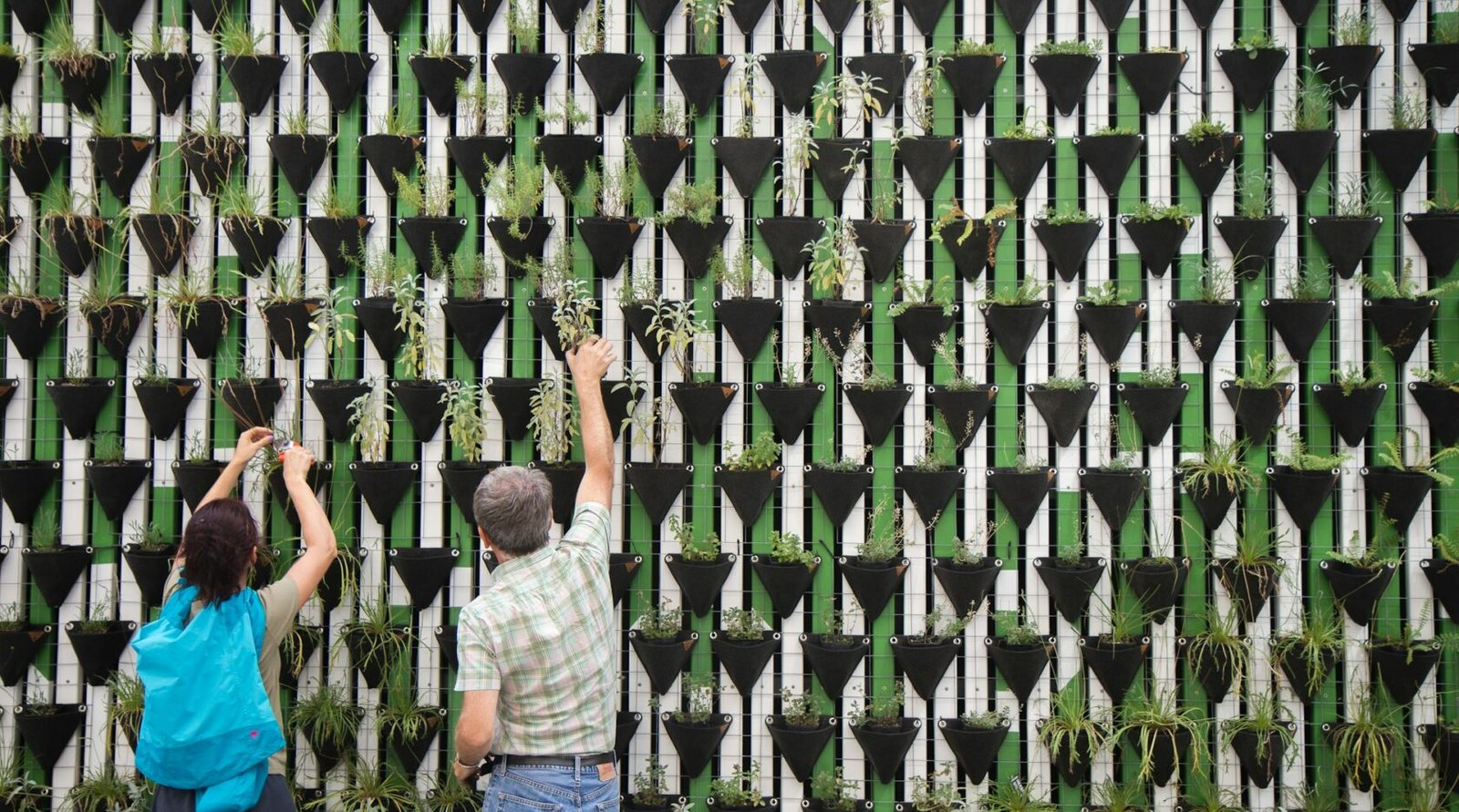
One specimen per pocket, planted into pre-filled potting mix — the point in the process shown here.
Difficulty: Easy. Time required: Roughly 1–2 hours for a single panel, most of it spent filling and planting pockets rather than mounting.
Mistakes to Avoid During Setup
- Mounting into drywall without checking for a stud or using load-rated anchors — this is the single most common reason a panel comes loose within the first few months.
- Using garden soil instead of potting mix — it compacts in shallow pockets and drains poorly, leading to waterlogged roots.
- Overfilling pockets to the brim, which causes water to run off immediately instead of soaking in.
- Planting more than one specimen per pocket to “fill it in faster” — it usually slows growth for both plants instead.
First-Week Check
In the first week, check the panel daily rather than settling into a fixed watering schedule right away:
- Check moisture in a few different pockets, not just the top row — this is when you’ll notice if water isn’t reaching the bottom evenly.
- Look for any sagging, shifting, or gaps between the panel and the wall, which points to a mounting issue rather than a plant one.
- Watch for wilting in newly planted specimens — some initial droop after transplanting is normal, but it should recover within a day or two of consistent watering.
Common Problems and How to Fix Them
Plants near the bottom wilt while the top looks fine
Likely cause: Water is running through the top pockets before fully saturating them, leaving little for the lower rows. Fix: Water more slowly, in two or three shorter passes rather than one long pour, and check that each pocket’s mix is actually moist, not just the surface. Avoid: Simply watering longer at the top, which often just increases runoff rather than reaching the lower pockets.
Leggy, stretched growth
Likely cause: Insufficient light, often because a system was mounted somewhere that looked sunny at one time of day but is shaded most of the day. Fix: Reassess actual sun hours before relocating, or switch to shade-tolerant plants rather than repeatedly repositioning the whole panel.
Mold or a sour smell on a fabric panel
Likely cause: Poor drainage or overwatering, especially in humid climates. Fix: Let the panel dry out further between waterings and check that water isn’t pooling behind the fabric against the wall. When to change approach: If a wall stays persistently damp behind the panel regardless of watering habits, that wall may not be a good long-term spot for a moisture-holding system — consider a system with a gap or drainage tray instead.
The whole structure is sagging or pulling away from the wall
This is a structural weight problem, not a plant-care problem. Stop adding water until the mounting is reassessed; re-anchor with hardware rated for the fully saturated weight, or move to a freestanding tiered planter instead of a wall-mounted one if the wall itself isn’t solid enough.
Gutter or pipe planters holding standing water
Likely cause: Missing or insufficient drainage holes, or holes that were drilled but are too small or too infrequent. Fix: Drill additional holes every 6–8 inches; standing water in these narrow systems leads to root rot far faster than in a standard pot.
Mistakes We’d Avoid
- Mounting before checking the wall’s real load capacity. A dry panel feels light; the same panel fully watered can weigh several times more. Confirm the anchor hardware and the wall itself can take that weight before you fill a single pocket.
- Choosing solid plastic pockets over felt or canvas. Plastic drains unevenly and tends to pool at the bottom of each pocket. It’s cheaper upfront and more likely to need replacing sooner.
- Judging sun exposure from a single glance. A wall that looks bright at noon can be shaded most of the morning or evening. Watch the spot across a full day before committing plants to it.
- Planting a privacy screen too sparsely. A single trellis vine planted for coverage needs real spacing and time to fill in — don’t expect a thin, newly planted vine to block a sightline in its first season.
- Skipping drainage holes on gutters and pipes because “it’ll probably be fine.” It’s the single most common reason these two systems fail, and it’s a five-minute fix at setup versus a rebuild later.
- Using ordinary garden soil instead of a well-draining potting mix. Garden soil compacts in shallow containers and drains poorly; a proper potting mix (see our Composting & Soil hub for more on soil health generally) matters more in vertical systems than in a standard bed.
A wall that looks bright at noon can be shaded most of the morning or evening.
Maintenance
Expect to check moisture levels daily during warm weather, since vertical systems dry out faster than ground beds (see “What You Need to Know” above). Fabric pocket panels typically need replacing every 2–4 years outdoors as the material breaks down from UV exposure and repeated wetting; wood pallets often need replacing sooner in wet climates. Trellis-and-planter setups are the lowest-maintenance option long-term, since the trellis itself doesn’t hold moisture or degrade the way fabric or untreated wood does. Espalier and living wall installations carry the most ongoing commitment — annual structured pruning for espalier, and irrigation-system upkeep for living walls.
Frequently Asked Questions
Can I use a vertical garden system in full shade?
Only with shade-tolerant plants — most herbs, strawberries, and flowering annuals need at least partial sun to perform well. A shaded vertical system is better suited to ferns, pothos, or other foliage plants chosen specifically for low light.
Do vertical gardens need more fertilizer than regular pots?
Often yes. The smaller soil volume in most vertical systems holds fewer nutrients, and frequent watering flushes nutrients out faster. A diluted liquid feed on a more frequent schedule than you’d use for a standard pot is common practice for pocket and tiered systems.
Will a vertical garden damage my fence or wall?
It can, if moisture is trapped against the surface long-term — wood fences are more at risk than masonry walls. A small gap between the panel and the surface, or a system with its own backing, reduces this risk.
Is espalier realistic for a beginner?
It’s realistic but slow — expect several years of annual pruning and training before a tree fills its intended shape. It suits someone willing to commit to a long-term project, not someone who wants fruit in the first season.
Are cinder blocks safe for growing food?
Concrete can leach lime and gradually raise soil pH over time, which matters more for sensitive edibles than for herbs or ornamentals. If you’re growing food in cinder blocks long-term, a liner between the block and the soil reduces the concern.
Suggested Visuals for the Remaining Ideas
Real photos are embedded above for the trellis and tiered/balcony ideas. Two ideas here are harder to photograph well without a live installation — for editorial reference, these are the shots that would add the most value if sourced later:
- Espalier, early training stage: a young whip tied to horizontal wires against a wall, to set realistic expectations for what year one actually looks like. Alt text: “young fruit tree trained flat against a wall in early espalier stages.”
- Living wall panel, modular cells: a close-up showing individual planting cells and the irrigation line, to make the maintenance commitment visible rather than just described. Alt text: “modular living wall panel with individual plant cells and irrigation tubing.”
Final Takeaway
Match the idea to your actual conditions — what your structure can hold, how much sun the space really gets through the day, your climate, and how much ongoing effort you actually want — rather than picking whichever setup looks best in a photo. For most renters and small spaces, a felt pocket panel or a simple trellis-and-planter combination solves the space problem without the cost or complexity of a tiered system, a living wall, or a multi-year espalier project.
For a broader framework on planning a small-space layout beyond a single vertical feature, see our Complete Guide to Garden Ideas, our Small Backyard Garden Ideas guide for pairing vertical elements with seating, and our Container Gardening Ideas hub for more container-based approaches. If you’re considering fruiting or shrub options like espalier, our Trees & Shrubs hub covers tree and shrub care more broadly, and our lavender care guide is a useful reference for a low-maintenance flowering plant that also suits an A-frame or tiered planter.
Sources: University of Minnesota Extension; Utah State University Extension; Oregon State University Extension.