Small Backyard Garden Ideas That Actually Work
Practical, tested ways to make a small backyard feel bigger and grow more: from vertical planting to multi-use seating beds.
The short answer
The small backyard ideas that work are the ones that edit rather than add: one focal point instead of five, planting grown vertically on walls and fences, a sightline broken partway down so the space is discovered rather than measured, and a restricted palette of three or four species repeated throughout.
A small backyard does not have to feel cramped. With the right layout choices, even a modest space can hold a productive garden, a place to sit, and room to breathe. These ideas focus on structure and function first, which is what actually makes a small garden feel bigger rather than just busier.
Biggest win
Use vertical surfaces
Plant palette
3 to 4 species, repeated
Common mistake
Fencing off every zone
Plant Vertically Before You Plant Wide
Ground space is the scarcest resource in a small backyard, but wall and fence space usually goes unused. Trellises, wall mounted planters and obelisks let you grow climbing beans, peas, clematis or espaliered fruit trees without giving up a single square foot of bed space.
Vertical growing also changes how the space reads. Drawing the eye upward makes a boundary feel like a green wall rather than the edge of a small box, and it puts foliage at eye level where you actually notice it.
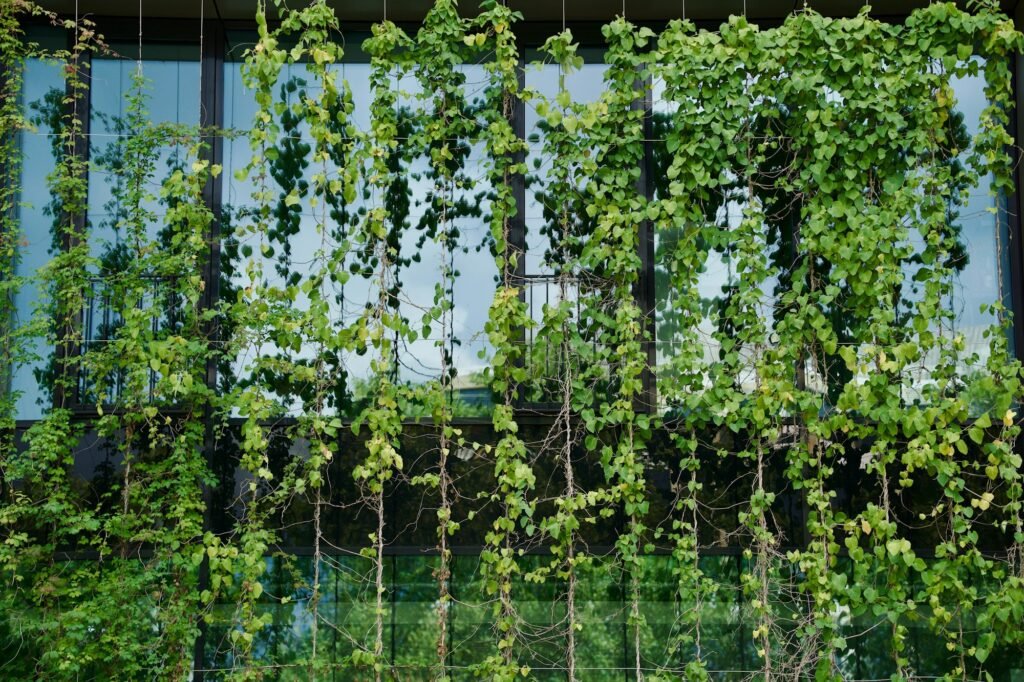
Good starter plants for vertical growing
- Climbing roses or clematis for a fence line
- Pole beans or peas for an edible trellis
- Espaliered apple or pear against a sunny wall
- Star jasmine or honeysuckle where you want scent near seating
Fix supports to the wall on battens rather than flat against it. The inch of air behind the trellis keeps the wall dry and lets you unclip the whole panel when the wall needs maintenance.
Use Raised Beds to Define the Space
Raised beds do double duty: they improve drainage and soil quality, and their edges act as informal pathways and seating. In a small yard, two or three raised beds arranged around a central path usually reads as more organised, and more spacious, than one large undefined planting area.
Keep beds narrow enough to reach the middle from either side, which is around four feet for a bed you can walk both sides of and about two and a half feet against a wall. A bed you cannot reach into becomes a bed you stop maintaining.
For a permanent version with better drainage and real structure, see our guide to building a stone garden bed in five steps.
Make Every Surface Multi-Purpose
A bench with storage underneath, a low wall that doubles as extra seating, a shed roof planted with sedum: in a small garden, surfaces that do two jobs save the most room.
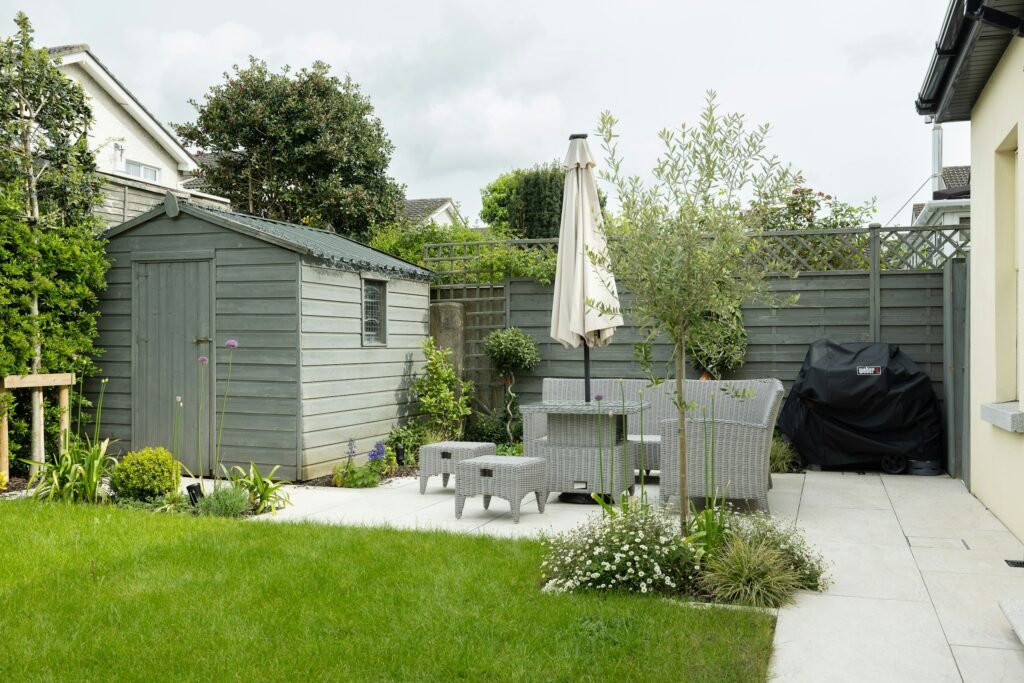
Ideas worth borrowing
- A built in bench along a boundary fence with planters behind it
- Gravel seating areas that blend into planting beds rather than being fenced off
- A pergola that provides shade and supports climbing plants
- Wide bed edges at seat height, around 18 inches, so the bed itself is overflow seating
Do Not Divide a Small Space Into Small Rooms
The instinct in a small garden is to separate functions with screens and borders, but every visual barrier tells the eye where the garden ends. Keeping sight lines open to the far boundary makes the whole area read as one space rather than three cramped ones.
Where you do want separation, use a change of surface or a low planting change rather than a solid screen. The brain registers the shift without the eye being stopped.
Keep the Plant Palette Simple
Small spaces read as larger when the planting palette is limited. Choose three or four repeating plants rather than one of everything. Repetition creates a sense of calm and makes a small garden look intentional rather than crowded.
Pick one structural evergreen, one or two flowering perennials and one grass, then repeat that group along the bed. It looks deliberate in year one and reads as a designed scheme by year three, which a collection of single specimens never does.
Containers Carry the Flexibility
Pots let you change the garden without redesigning it. Group them in odd numbers at varying heights rather than lining them along an edge, and use fewer, larger containers instead of many small ones. Large pots hold moisture far longer, which matters because container plants in a sheltered small yard dry out fast.
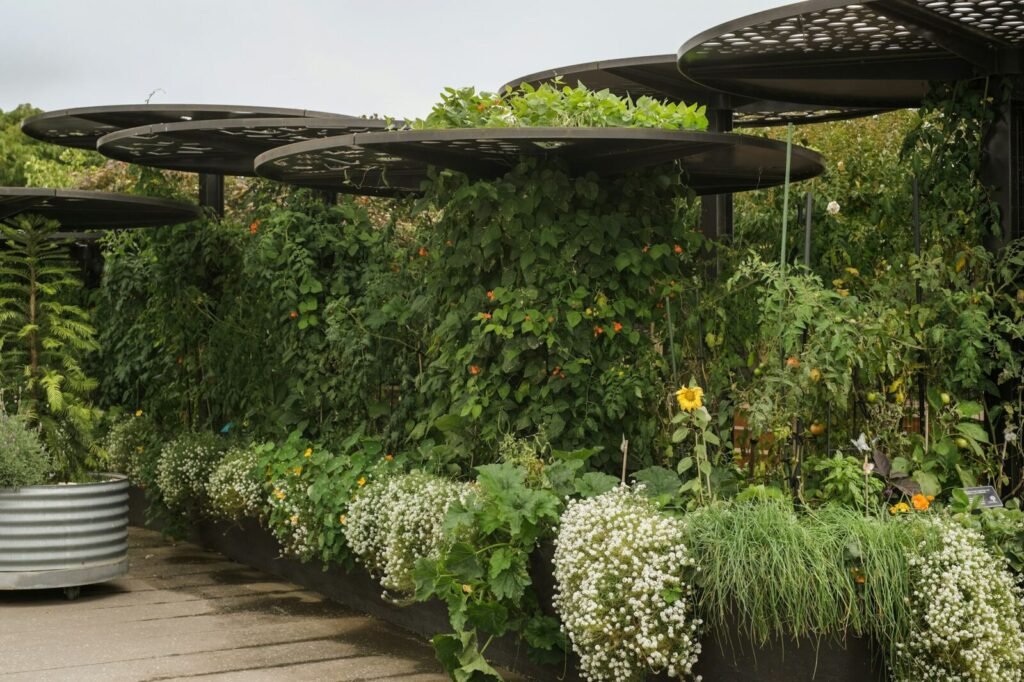
Light Paths and Beds, Not the Whole Yard
Low, warm path lighting extends how long you can use a small garden in the evening without making it feel like a parking lot. Focus light on the path and one or two feature plants rather than floodlighting the entire space.
Uplighting a single small tree from below does more for a small garden after dark than six evenly spaced path lights, and it keeps the boundary in shadow, which makes the space feel like it continues.
Before you buy anything
Spend one weekend watching where the sun actually falls in your yard, hour by hour. A small garden usually has one genuinely sunny strip and a lot of part shade, and putting the seating in the sunny strip instead of the vegetable bed is the decision most people get backwards.
Frequently Asked Questions
What makes a small backyard look bigger?
Open sight lines to the far boundary, a limited plant palette repeated through the beds, and vertical planting on walls and fences. Dividing the space into small enclosed zones does the opposite.
How wide should paths be in a small garden?
Around 30 inches for a main route you walk regularly, and 18 inches is enough for a secondary path between beds. Narrower than that and you brush plants every time you pass.
Are raised beds worth it in a small yard?
Yes. They improve drainage and soil, define the layout, and their edges give you extra seating and informal paths without taking additional ground space.
[…] growing, raised beds, and multi-purpose seating do the most work in a small footprint. See our Small Backyard Garden Ideas That Actually Work for a full breakdown of layout tactics that make small spaces feel […]
[…] layout beyond a single vertical feature, see our Complete Guide to Garden Ideas, and our Small Backyard Garden Ideas guide for pairing vertical elements with seating and other layout […]