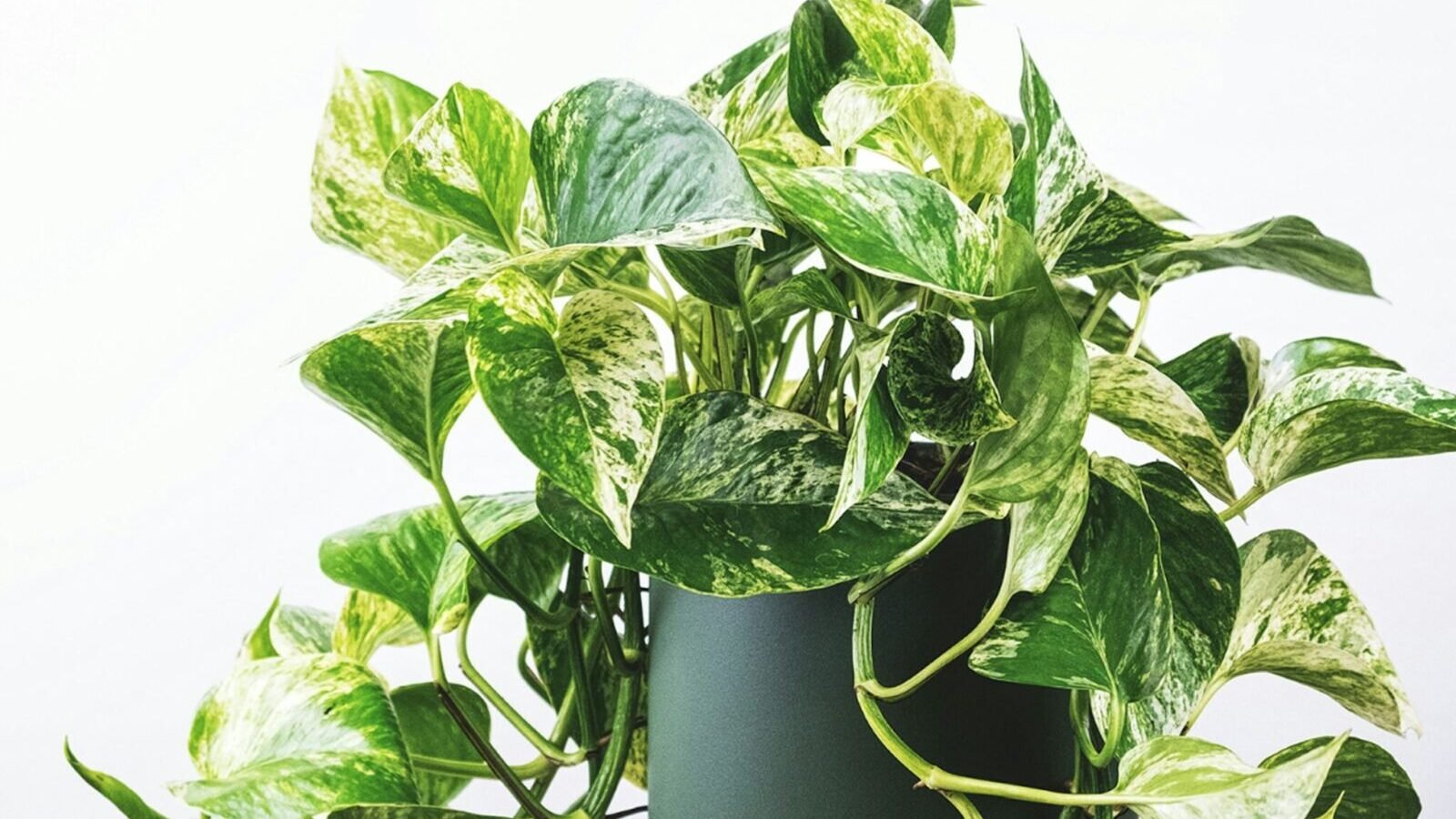
How to Propagate Pothos in Water: A Step-by-Step Guide
How to identify a node, root a pothos cutting in water, and pot it up, with a realistic week-by-week root timeline.
Table of Contents
- Step 1: Find the Right Node
- Step 2: Set Up the Jar
- Water Versus Soil Propagation
- Root Progress Timeline
- Step 3: Pot the Rooted Cutting
- What a Node Actually Looks Like
- Choosing Which Stem to Cut
- Light and Temperature While Rooting
- Why Water Roots Struggle in Soil
- Variegated Cuttings Need More Light
- Common Mistakes
- Frequently Asked Questions
The short answer
Cut a pothos stem just below a node, strip the lowest leaf, and stand the node in water with the remaining leaves above the surface. Roots appear within one to two weeks and the cutting is ready for soil once they reach two to three inches. Change the water weekly. A cutting with no node will never root, however healthy the leaf looks.
Pothos is one of the easiest houseplants to propagate, and rooting cuttings in water is the most reliable way to see the process happen, because you can watch the roots form instead of guessing what is happening underground. This guide walks through cutting, rooting and potting up, step by step.
Rooting time
4 to 6 weeks to pot up
Water change
Every 5 to 7 days
Pot up at
Roots 1 to 2 inches long
Step 1: Find the Right Node
Roots only grow from a node, the small brown bump on the stem, usually opposite a leaf, where a tiny aerial root nub is often already visible. A cutting without a node in the water simply will not root, no matter how long you wait.
Using clean scissors or pruning snips, cut a stem section with at least two or three nodes. Cut about half an inch below the lowest node, then remove the leaf closest to that bottom node so it is not sitting submerged and rotting.

Step 2: Set Up the Jar
Use a clear glass jar so you can monitor root growth and water clarity. Fill it with room temperature water, deep enough to submerge the nodes but keep any remaining leaves above the surface.
- Place the jar in bright, indirect light, because direct sun can overheat the water and stress the cutting.
- Change the water every 5 to 7 days, or sooner if it looks cloudy.
- Keep the jar somewhere consistently warm, since cold water slows rooting considerably.
Water Versus Soil Propagation
Water propagation is slower to establish a plant long term than rooting directly in soil, but it lets you see exactly when roots have formed, which makes it easier for beginners to know when to pot up. Soil propagation skips the transition shock of moving from water to soil, but you are rooting blind. For a first attempt, water propagation is the more forgiving option.
Root Progress Timeline
Rooting speed varies with light, temperature and the individual cutting, but a general timeline looks like this:
- Week 1: little visible change; the node may swell slightly.
- Week 2 to 3: small white root nubs emerge from the node.
- Week 4 to 6: roots lengthen to 1 to 2 inches with visible branching, which is the point to pot up.
Step 3: Pot the Rooted Cutting
Once roots are at least an inch or two long, move the cutting to a well draining potting mix. Water grown roots are adapted to water and are more fragile than soil grown roots, so handle them gently and water the new pot thoroughly right after planting to settle the soil around them.
Keep the newly potted cutting out of direct sun for the first week or two while it adjusts, then move it to its regular bright, indirect spot.
Expect a pause in top growth for two or three weeks after potting. The plant is rebuilding roots suited to soil, and that is normal rather than a sign of failure.
What a Node Actually Looks Like
Almost every failed pothos cutting fails here, so it is worth being precise. A node is the slightly raised brown bump on the stem where a leaf joins it. Beside it you will often see a small brown nub, which is an aerial root waiting to grow.
Roots emerge only from nodes. A cutting made from the middle of a stem with no node, or a single leaf pulled off at the base, will sit in water looking perfectly healthy for weeks and then rot. There is nothing wrong with your technique; the cutting simply has no growing point.
Cut about a quarter inch below the node, using clean scissors. Each cutting needs at least one node and one or two leaves, no more.
Choosing Which Stem to Cut
Take from healthy, mature growth rather than the newest soft tips, which rot more easily. Long trailing vines can be divided into several cuttings, each with its own node.
This is also the moment to improve the parent plant. Pothos branches from the point where it is cut, so taking cuttings from a leggy vine makes the original bushier. Pruning and propagating are the same job.
Light and Temperature While Rooting
Bright indirect light speeds rooting noticeably. Direct sun heats the water and encourages algae; deep shade slows everything to a crawl.
Warmth matters more than people expect. Around 70 to 75°F is ideal, and a cutting on a cold windowsill in winter can take twice as long or stall completely. A clear glass lets you watch progress, but any container works.
Change the water weekly. Stale water loses oxygen, and oxygen is what the new roots need.
Why Water Roots Struggle in Soil
Water roots and soil roots are structurally different. Roots grown in water are thinner and more brittle, built for an environment with no resistance and constant moisture, and moving them straight into dry compost shocks them.
Two things ease the transition. Pot the cutting while roots are still short, around two to three inches, because younger roots adapt more readily than long established ones. Then keep the compost consistently damp for the first two weeks, rather than letting it dry as you would for an established pothos.
Some wilting in the first days is normal. If the leaves stay limp after a fortnight, the compost is either too wet or too dry, not the cutting failing.
Variegated Cuttings Need More Light
Marble Queen, Golden and other variegated pothos root more slowly, because the white and cream sections contain no chlorophyll and contribute nothing to the energy the cutting needs.
Give variegated cuttings brighter indirect light and more patience. Avoid taking a cutting that is almost entirely white, however striking it looks: with too little green tissue it often cannot sustain itself long enough to root.
Common Mistakes
- Cutting without a node: the single most common reason a cutting never roots.
- Submerged leaves: leaves left underwater tend to rot and can foul the whole jar.
- Potting too early: very short roots often fail to establish once moved to soil, so wait until they are at least an inch long.
- Leaving it in water for months: the longer a cutting stays in water, the harder the transition to soil becomes.
The one thing to get right
The node. If no node is submerged, nothing will happen no matter how long you wait or how good the light is. Find the brown bump on the stem before you make the cut.
For more on choosing plants that fit your indoor light levels, see our Indoor Plants guides.
Frequently Asked Questions
How long does pothos take to root in water?
Usually four to six weeks to reach roots long enough to pot up, with the first white nubs appearing around week two or three. Warmth and bright indirect light speed it up.
Why is my pothos cutting not rooting?
Almost always because no node is submerged. Roots emerge only from nodes, so a length of bare stem or a single leaf will never root.
Can I leave pothos in water permanently?
It will survive, but it will not thrive long term, and the longer it stays the harder the eventual move to soil becomes. Pot up once roots reach one to two inches.
Do I need rooting hormone for pothos?
No. Pothos roots readily in plain water without any hormone. It can speed things slightly in soil propagation, but for water propagation it is unnecessary.
How many cuttings should I put in one pot?
Three to five, spaced around the pot. A single cutting looks sparse for a long time, while several together give a full plant almost immediately.
Should I remove yellow leaves from a cutting?
Yes. A yellowing leaf is being abandoned by the cutting anyway, and removing it stops it decaying in the water and fouling it for the others.
Can I propagate other houseplants the same way?
Many, yes. Philodendron, monstera, tradescantia and spider plants all root in water from a node. Succulents and snake plants prefer soil, and ferns propagate by division instead.
[…] visible drooping well before the soil is fully dry. A general-purpose plant like pothos (see our pothos propagation guide) sits comfortably in the middle, tolerating some drying out without much […]
[…] of light levels. It’s also one of the easiest plants to propagate from cuttings — see our pothos propagation guide if you want to expand a single plant into several for […]