Yucca Plant Care Guide: Indoor and Outdoor
A practical yucca plant care guide covering both outdoor landscape yucca and indoor yucca canes: light, watering, soil, hardiness, and propagation.
The short answer
Yucca needs bright light, sharp drainage, and far less water than most people give it. Indoor yucca canes want a sunny window and watering only once the top two inches of soil are dry. Hardy outdoor species such as Yucca filamentosa survive to roughly zone 4 with no winter protection. Overwatering, not cold, is what kills them.
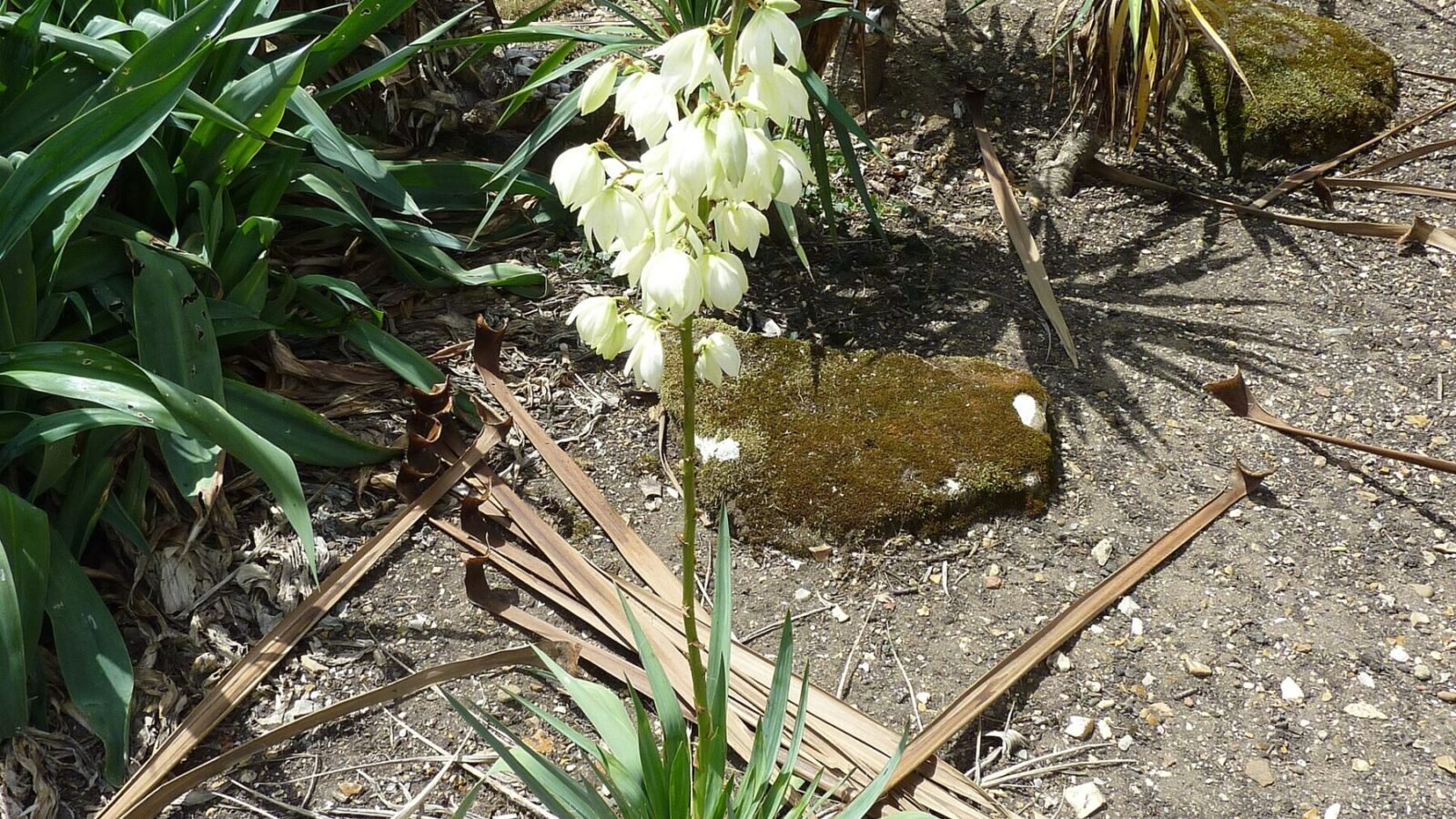
I put my first yucca in the worst possible spot on purpose — a bone-dry corner of the yard that gets baked in full sun all afternoon and never gets watered except by rain — because I’d already killed enough fussier plants there and wanted to see what would actually survive. Fifteen years later that yucca is taller than I am, throws up a spike of white bell-shaped flowers most summers, and has never once needed my attention. It’s the closest thing to a “plant it and forget it” landscape plant I’ve grown.
Yucca covers a wide genus of tough, drought-tolerant, sword-leaved plants native mostly to hot, dry parts of the Americas, and several species are grown both as sturdy outdoor landscape plants and as low-maintenance indoor houseplants. Yucca filamentosa, sometimes called Adam’s needle, is one of the hardiest outdoor species and is what’s growing in my own yard. According to the North Carolina Extension Gardener Plant Toolbox, it tolerates poor, sandy, dry soil and full sun exceptionally well, and is considered a low-maintenance landscape plant once established — exactly matching how little mine has ever asked of me.
Light
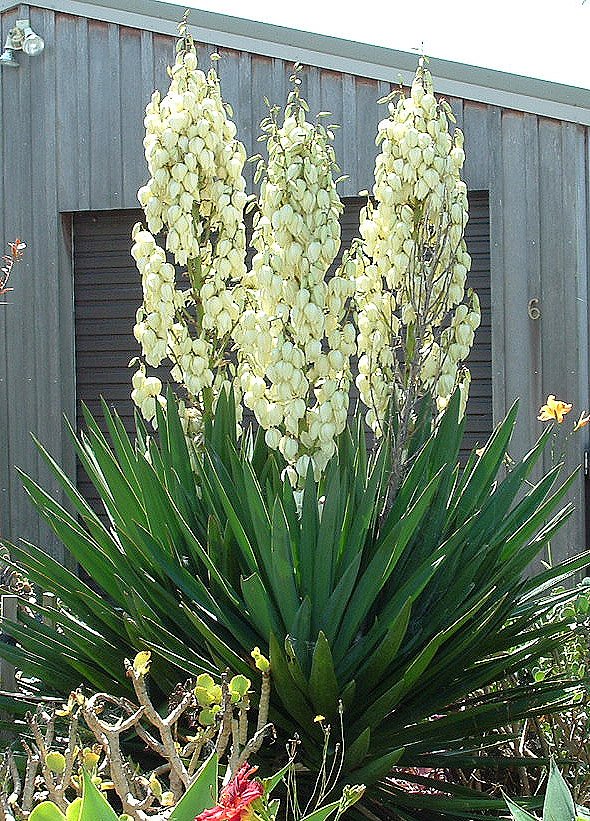
Outdoor yuccas want as much sun as you can give them — full sun produces the tightest, most upright rosette of leaves and the best chance of flowering. Indoor yuccas (often sold as Yucca elephantipes, the spineless yucca cane) need the brightest spot you have, ideally a south-facing window; without enough light the growth gets weak and leggy, reaching toward whatever light is available.
Watering
This is a genuinely drought-tolerant plant, and overwatering is the main way people kill it, especially indoors. My outdoor yucca gets watered by nothing but rainfall and has never shown a sign of stress even through dry summers. Indoors, let the soil dry out completely between waterings — I water indoor yucca canes maybe once every two to three weeks, less in winter. Root rot from soggy soil is the single biggest threat to this otherwise nearly indestructible plant.
Soil
Outdoors, yucca actually prefers poor, sandy, well-draining soil over rich garden soil — mine is planted in the sandiest, least amended corner of the yard and thrives specifically because of that, not despite it. Indoors, use a fast-draining cactus or succulent mix, or amend regular potting soil heavily with perlite or coarse sand.
Feeding
Outdoor yucca needs essentially no fertilizer once established; mine has never been fed in fifteen years. Indoor yucca canes benefit from a light feeding with a balanced liquid fertilizer diluted to half strength, once a month during spring and summer only.
Cold Hardiness and Outdoor Planting
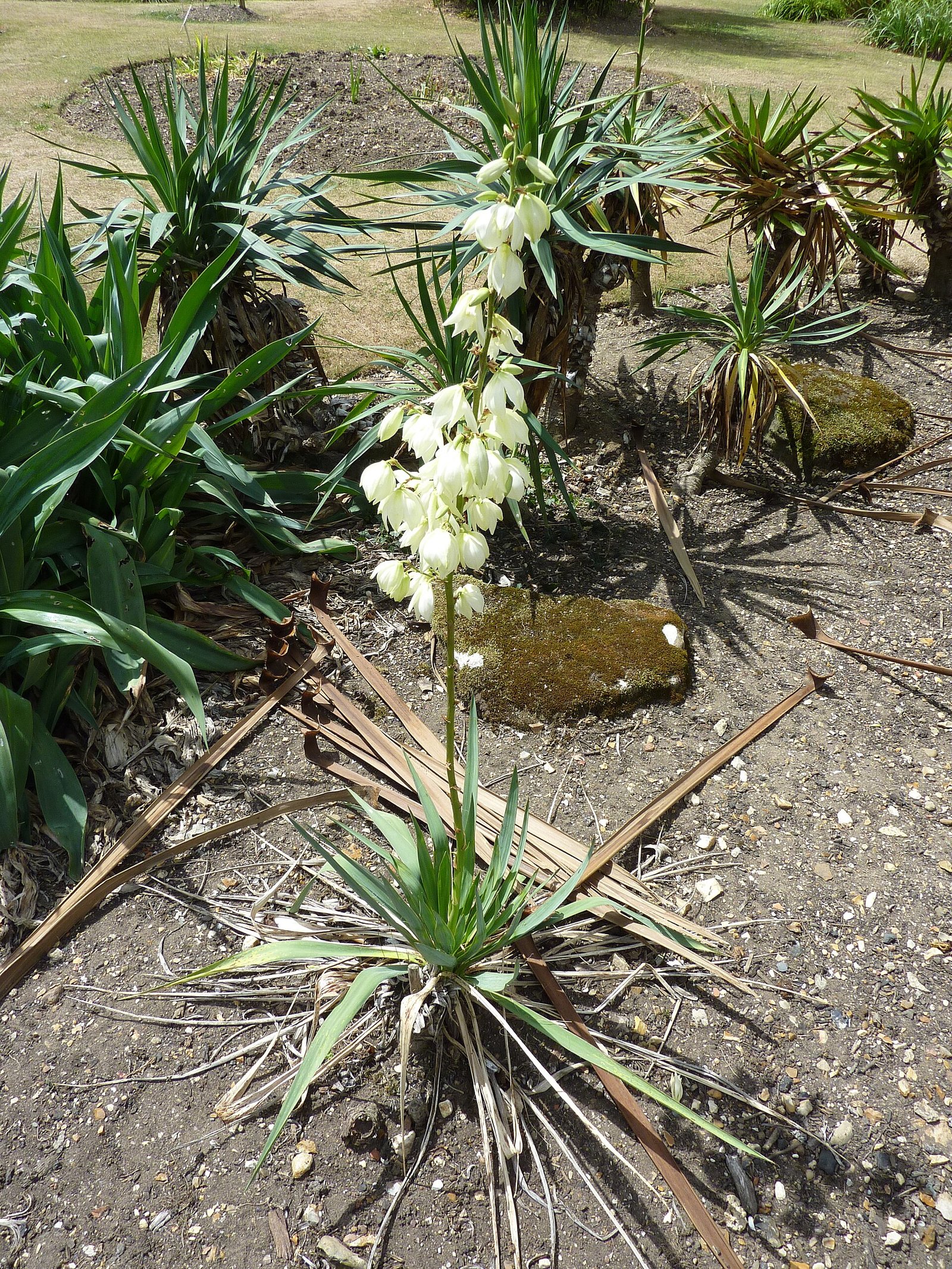
Yucca filamentosa is remarkably cold-hardy for such a desert-looking plant, tolerating winter temperatures well below freezing in many regions, which is part of why it works so well as a low-maintenance landscape plant far outside the desert Southwest people usually associate with yuccas. Plant it somewhere with excellent drainage; the one thing that will kill an established outdoor yucca is sitting in waterlogged soil over winter.
Propagation
Outdoor yucca is easiest to propagate by dividing offsets (“pups”) that form around the base of a mature plant — dig one up with some roots attached and replant it elsewhere. Indoor yucca canes are typically propagated from stem cuttings; a section of cane with no leaves, laid horizontally or set upright in well-draining soil, will often sprout new growth from dormant buds along the stem, which is actually how most nursery yucca canes are produced in the first place, using cut sections of stem from mature plants.
Indoor Yucca and Outdoor Yucca Are Different Plants
Most confusion about yucca comes from treating one name as one plant. The yucca sold as a houseplant and the yucca planted in a border are usually different species with different needs.
Indoor is nearly always Yucca elephantipes, the spineless yucca, sold as thick canes with leaf rosettes on top. Soft leaf tips, tender, and grown for form.
Outdoor is usually Yucca filamentosa or Yucca gloriosa, ground level rosettes of stiff, sharply pointed leaves, hardy through hard winters and flowering on tall spikes in summer.
Buying the wrong one for the position is the most expensive yucca mistake. An elephantipes planted outdoors in a cold zone does not survive its first real winter.
Repotting and Container Care
Yucca prefers being slightly pot bound and resents frequent disturbance. Repot every two or three years at most, in spring, moving up one size only.
Weight matters more than it sounds. A tall cane yucca in a light plastic pot becomes top heavy and tips over, taking the leaves and often the cane with it. Use a heavy terracotta or stone pot, or weight the base with gravel under the compost.
Use a gritty, free draining mix: standard compost cut with about a third sharp sand or perlite. Never leave the pot standing in a saucer of water.
Pruning and Tidying
Lower leaves yellow and die as the plant grows. This is normal, not disease. Pull them off cleanly with a downward tug, or cut close to the trunk.
A cane yucca that has outgrown its space can be cut through. Saw the trunk at the height you want, keep the top as a cutting, and the stump will usually sprout new growth below the cut within a few weeks. Do it in spring, so the plant has a full season to recover.
On outdoor species, cut the flower spike down once it has finished, and remove dead leaves from the base to keep air moving through the crown.
Sharp Leaves and Pet Safety
Two practical cautions worth knowing before planting.
Outdoor yucca leaf tips are genuinely sharp enough to injure an eye. Keep them away from paths, doorways, and anywhere children play, or choose a soft leaved variety for those positions.
Yucca is also toxic to cats and dogs, causing vomiting and drooling if chewed. It is not usually life threatening, but it is a reason to place an indoor yucca out of reach and to contact your veterinarian if a pet has eaten any.
Common Problems
Soft, mushy, discolored areas at the base almost always mean root or stem rot from overwatering or poor drainage — this is by far the most common way this plant dies, especially indoors. Brown leaf tips can mean underwatering, low humidity, or salt buildup from tap water. Sparse, leggy growth reaching to one side means insufficient light.
Frequently Asked Questions
Can yucca survive winter outdoors?
Yucca filamentosa is quite cold-hardy and survives freezing winters in much of the country as long as the soil drains well and doesn’t stay waterlogged.
How often should I water an indoor yucca?
Roughly once every two to three weeks, letting the soil dry out completely between waterings. Overwatering is the most common cause of death for indoor yucca canes.
Why isn’t my yucca flowering?
Outdoor yucca typically needs full sun and a few years of maturity before it sends up a flower spike. Not every plant flowers every year even once mature — mine skips a year here and there.
If you want one plant in your yard or home that genuinely asks for nothing, this is it. Give it sun, drainage, and then leave it alone — that’s the entire care routine that’s kept mine thriving for fifteen years.
Why are my yucca leaves turning yellow?
Lower leaves yellowing steadily is normal ageing. Yellowing across the whole plant, with soft or mushy trunk tissue, is overwatering and usually root rot. Check the base of the cane: it should be firm.
How much light does an indoor yucca need?
As much as you can give it. A south or west facing window suits it best. In low light the plant stretches, leaves thin out, and growth becomes weak and floppy.
Can I cut the top off a yucca that has grown too tall?
Yes. Cut the cane at the height you want in spring. The stump usually resprouts below the cut, and the removed top can be rooted as a new plant in gritty compost.
Do yuccas need feeding?
Very little. A dilute balanced feed once or twice through spring and summer is enough. They evolved in poor soils, and heavy feeding produces soft growth that flops.