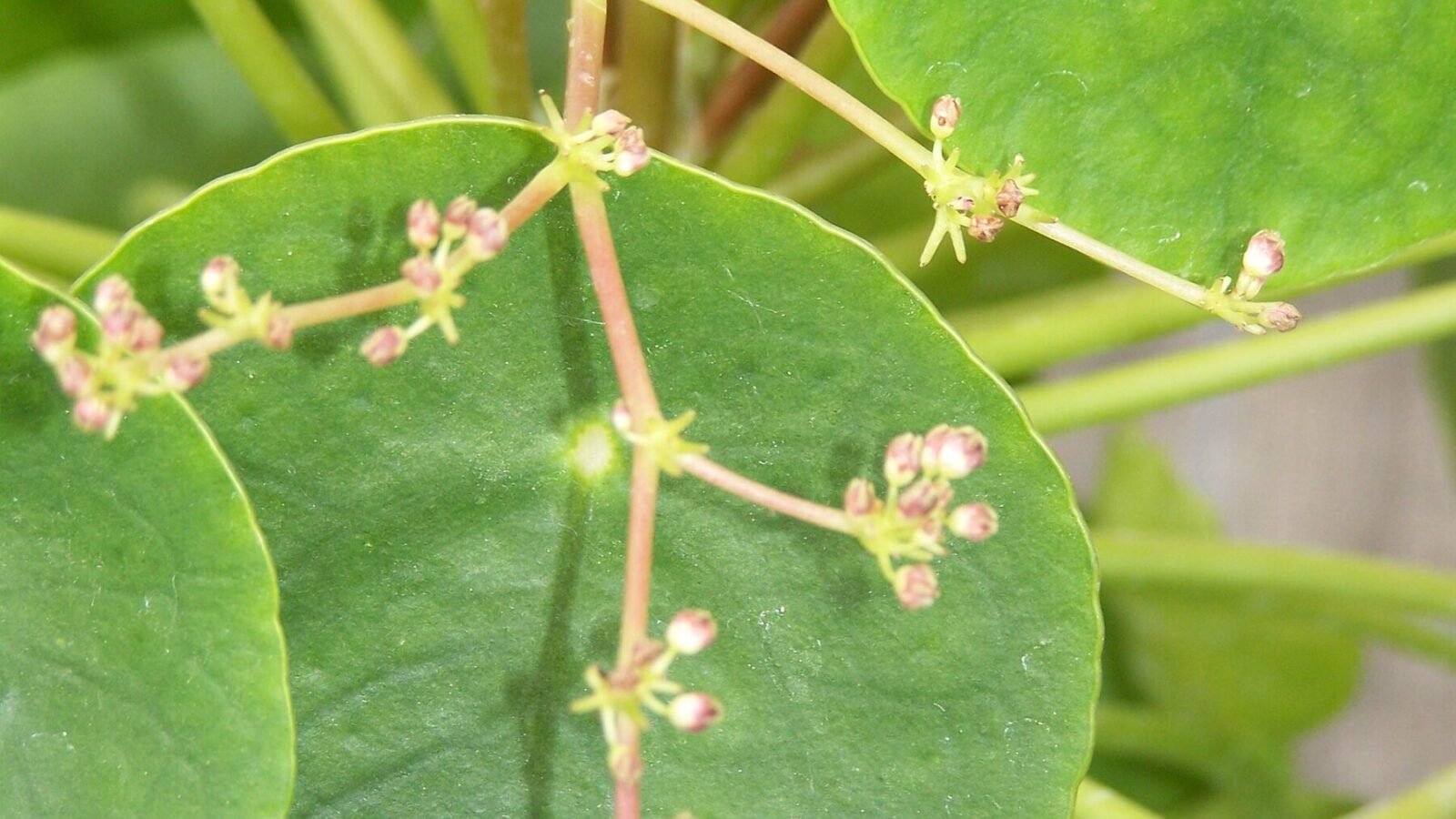
Chinese Money Plant (Pilea Peperomioides) Care Guide
A hands-on Chinese money plant care guide: light, watering, why it leans, repotting, and three easy ways to propagate the plantlets.
The short answer
Pilea peperomioides wants bright indirect light, a quarter turn every week so it grows evenly, and watering only once the top inch of soil is dry. It produces offsets at the base and along the stem which can be separated once they are a few inches tall, which is why it is called the sharing plant. Curling or drooping leaves are almost always light or water, not disease.
A neighbor handed me a little rooted pup of her Chinese money plant over the fence one spring, apologizing that it was “just a weed, it makes a hundred babies a year.” She wasn’t exaggerating by much. Within two years that single pup had turned into three full pots on my own windowsill, plus enough extra offshoots that I’d potted up and given to half the street. It’s one of the few plants where the hardest part of “propagation” is finding people to give the extras to.
Pilea peperomioides, often called the Chinese money plant, pancake plant, or UFO plant for its round, flat, coin-shaped leaves, has been passed hand-to-hand between home gardeners for decades rather than sold widely in nurseries — which is exactly how mine arrived, and probably how most people still get their first one. The North Carolina Extension Gardener Plant Toolbox notes it prefers bright indirect light and well-draining soil, and produces plantlets freely from its roots — the trait responsible for its whole reputation as the “friendship plant.”
Light: Rotate It or It Leans
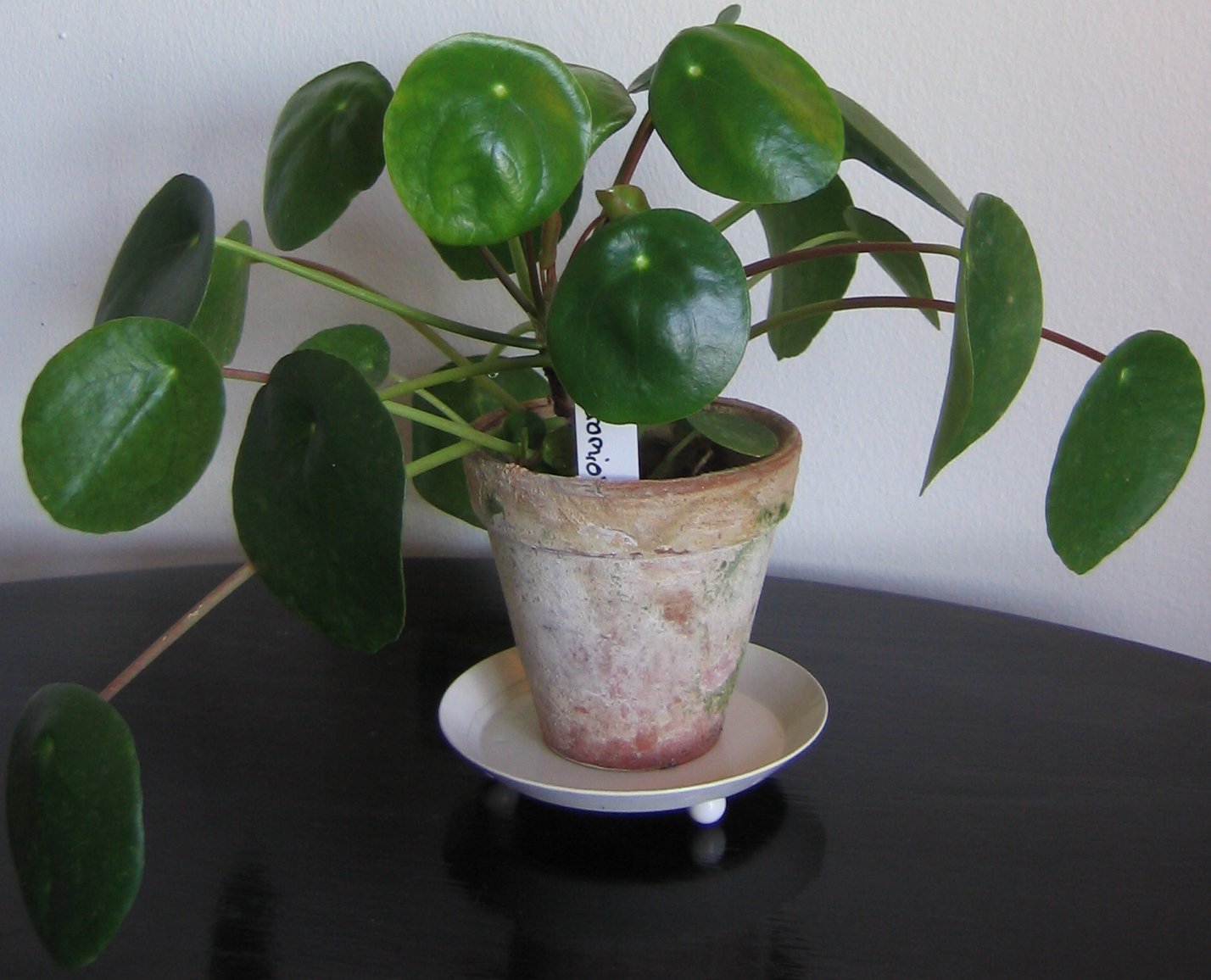
Bright, indirect light keeps the round leaves flat and full. One quirk I learned the hard way: Pilea leans hard toward its light source, sometimes within just a few days. I now give mine a quarter turn every time I water so it grows evenly instead of ending up lopsided and reaching sideways out of the pot, which is exactly what happened to my first one before I figured out the pattern.
Watering
Let the top inch or two of soil dry out between waterings, then water thoroughly. Pilea’s leaves will droop noticeably when it’s thirsty, which is actually a useful, obvious signal rather than something to worry about — mine perks back up within an hour or two of a good drink. Overwatering is the more serious risk, showing up as yellowing lower leaves and, eventually, root rot if the soil stays soggy for too long.
Soil and Feeding
A standard well-draining potting mix cut with some perlite works well. Feed monthly during spring and summer with a balanced liquid fertilizer diluted to about half strength; skip it in winter. Pilea is a fairly fast grower when it’s happy, and it appreciates a light feeding schedule to keep pace with new leaf production.
Repotting
Pilea grows quickly and can look top-heavy in its original nursery pot within a year. I repot mine annually in spring, moving up one size and refreshing the soil. Because it also spreads through underground roots that send up new plantlets around the base, repotting time is also the easiest moment to separate any pups you want to pot up separately.
Propagation: Where This Plant Earns Its Nickname
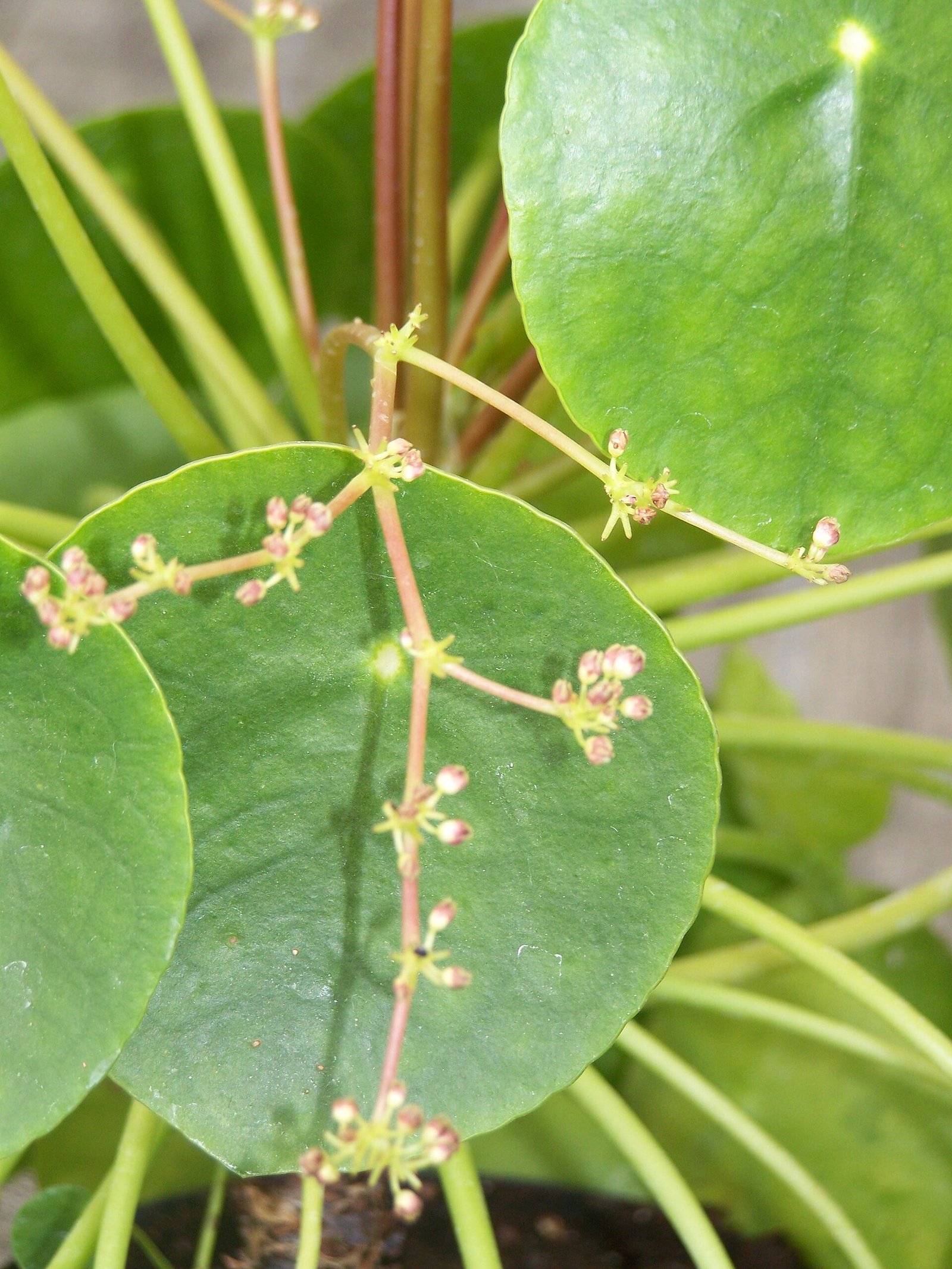
Pilea produces baby plantlets in three main ways, and I’ve used all three over the years:
- Root pups — small plantlets pop up from the soil around the base of the mother plant, connected by an underground runner. Once a pup has a few leaves of its own, dig it up carefully with some root attached, separate it from the runner, and pot it separately.
- Stem offshoots — occasionally a plantlet sprouts partway up the main trunk instead of at the base. Cut it off close to the trunk with a clean knife and root it in water until you see roots, then pot it in soil.
- Top cuttings — if the main stem gets tall and leggy over a few years (which happens eventually), you can cut the top rosette off and root it in water as a fresh, shorter plant.
Reading Curled Leaves
Leaf curl is the signature Pilea complaint, and the direction of the curl narrows the cause considerably.
- Curling downward, edges tucked under: usually too much direct sun, or the soil going too dry between waterings.
- Curling upward, cupping like a bowl: typically low light, as the plant reaches for more, or a sudden temperature swing.
- New leaves small and curled, older leaves fine: often a nutrient shortage in tired compost, or a plant that has outgrown its pot.
Mild curl on a plant that is otherwise growing is not an emergency. Change one variable, wait two weeks, and watch the new growth rather than the old leaves, which will not uncurl.
Temperature and Humidity
Pilea is more tolerant than its delicate look suggests. It is comfortable between about 60 and 75°F and handles average household humidity without help.
What it does not tolerate is cold draughts and sudden change. A windowsill that gets very cold at night in winter is a common cause of dropped leaves, and the plant is usually blamed on watering instead.
Below about 50°F growth stops and leaves drop. Move it off a cold sill before winter rather than after the damage shows.
Keeping the Shape Even
A Pilea grows toward light hard enough to lean visibly within weeks. Turning the pot a quarter turn each time you water is the single habit that keeps it symmetrical, and it costs nothing.
Over time the plant naturally loses lower leaves and reveals a bare stem. This is normal maturity rather than a fault, and many growers prefer the look. If you do not, the top can be cut off and rooted, and the stump will usually resprout.
Dust the leaves occasionally. Those flat round leaves collect dust faster than most houseplants, and dust genuinely reduces the light reaching a plant that already wants more.
Safe Around Pets
Pilea peperomioides is listed as non toxic to cats and dogs, which makes it one of the easier choices for a household with animals. That is unusual among popular houseplants, and worth knowing if you are choosing between this and a peace lily or a yucca, both of which are toxic.
Buying a Healthy Plant
Check three things before buying. Look for firm, flat, upright leaves rather than curled or limp ones. Check the soil surface for small offsets, which tell you the plant is established and will give you free plants later. And lift the pot: a plant that is very light is likely dry at the root and has been stressed on the shelf.
Common Problems
Drooping leaves usually mean it’s thirsty — water and it typically recovers within hours. Yellowing lower leaves in small numbers is normal aging, but yellowing across the whole plant points to overwatering. Curling leaves that also look pale can mean too much direct sun; move it back from the window slightly. Leggy, stretched growth with big gaps between leaves means it needs more light.
Frequently Asked Questions
Why is my Chinese money plant drooping?
Almost always thirst. Water it thoroughly and it should perk back up within a few hours. Consistent droopiness even after watering can point to root problems instead.
Why does my Pilea keep leaning to one side?
It grows toward its light source quickly. Rotate the pot a quarter turn every time you water to keep growth even on all sides.
How do I get more plantlets from my Pilea?
Keep it in bright indirect light and let it mature — plantlets appear on their own from the roots and occasionally the stem once the plant is well established, usually within its first year or two.
If someone hands you a little Pilea pup over a fence like mine did for me, take it. Within a couple of years you’ll be the one handing out the extras.
Is the Chinese money plant safe for cats and dogs?
Yes. Pilea peperomioides is listed as non toxic to cats and dogs, unlike many common houseplants.
Why is my Pilea losing its lower leaves?
Some loss is natural as the stem lengthens with age. Rapid loss usually points to cold draughts, a sudden move, or soil kept too wet.
How fast does a Chinese money plant grow?
Fairly quickly in good light, reaching around 12 inches within a couple of years, and producing offsets well before that.
Should I cut the bare stem?
Only if you dislike the look. Cutting the top off and rooting it gives you a compact plant, and the stump usually resprouts, so you end up with two.