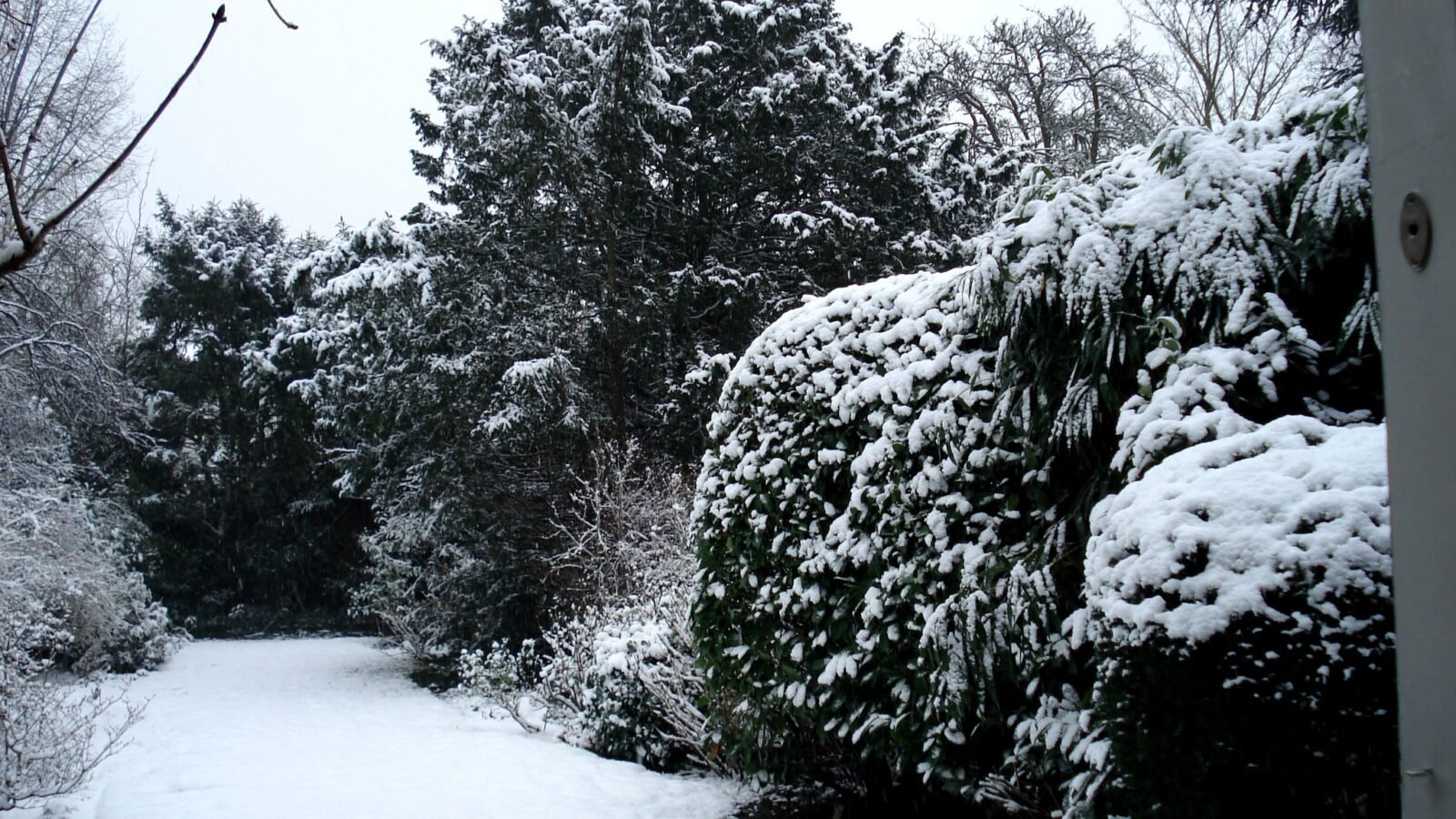
Winter Garden Care
Protecting borders, pots and evergreens through frost, snow and the coldest months.
Table of Contents
Winter damage in the garden is rarely caused by cold alone. Most losses come from a handful of specific mechanisms: soil that freezes and thaws repeatedly, evergreens drying out in wind, roots in containers with no soil mass to insulate them, and snow load breaking branches. Understanding which one threatens which plant makes winter protection straightforward rather than guesswork.
Mulch timing
After the soil surface freezes
Containers
About 2 zones less hardy than in ground
Evergreens
Water until the ground freezes
What Actually Kills Plants in Winter
Frost heave. Repeated freezing and thawing expands and contracts the soil, physically pushing shallow rooted perennials and new plantings up and out of the ground, where exposed roots then dry out and die.
Winter desiccation. Evergreens keep losing water through their foliage all winter. When the soil is frozen, they cannot replace it, so wind and winter sun scorch the leaves brown.
Root freezing in containers. Roots are less hardy than top growth. In the ground they are insulated by soil mass, but in a pot they are exposed on all sides and can freeze solid.
Mechanical damage. Wet snow and ice split branches and flatten evergreens, particularly upright, multi stemmed forms.
The counterintuitive one
Winter mulch is not there to keep soil warm. It is there to keep soil consistently cold, so it stops freezing and thawing and heaving plants out of the ground.
Mulch After the Ground Freezes, Not Before
This is the counterintuitive one. The purpose of winter mulch is not to keep the soil warm, it is to keep the soil consistently cold so it stops freezing and thawing. Mulching early, while the soil is still warm, insulates that warmth in and encourages growth that will not survive a hard freeze.
Wait until the top inch or two of soil has frozen, then apply three to four inches of a loose material such as shredded leaves, straw or bark over perennial beds. Keep it off the crowns of the plants themselves, where it traps moisture and causes rot.
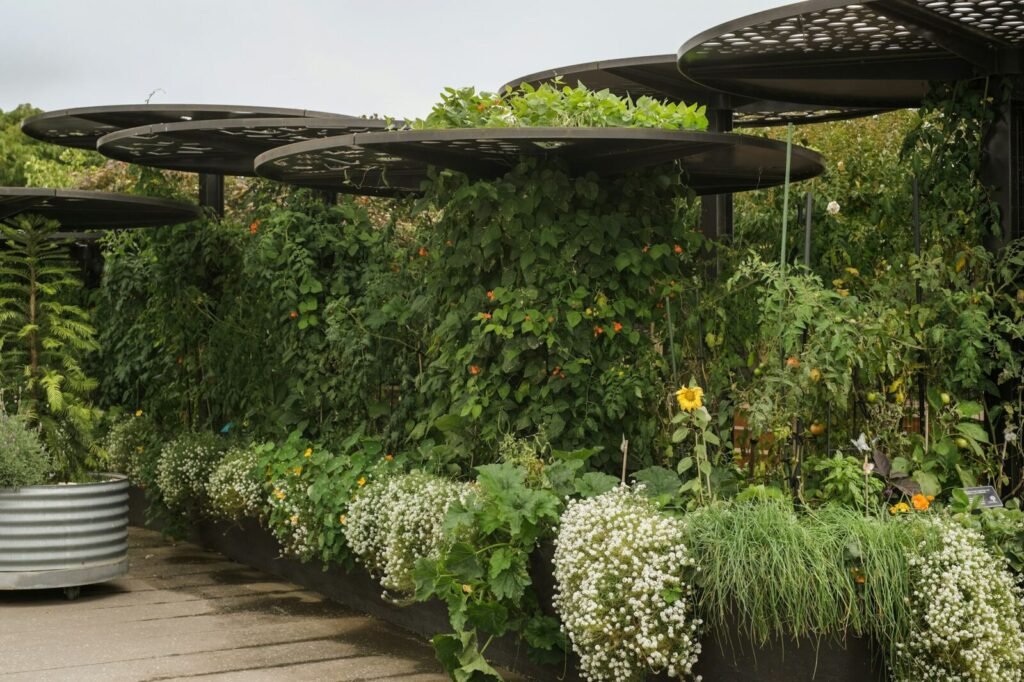
Containers Need the Most Help
A useful rule: a plant in a pot is roughly two hardiness zones less hardy than the same plant in the ground. A shrub rated to your zone will often not survive winter in a container outdoors.
Options, in order of effectiveness: move pots into an unheated garage or shed where they stay cold but stable; group them together against a sheltered wall and wrap the sides with insulation; or sink smaller pots into a spare bed so the surrounding soil does the insulating.
Whatever you do, raise pots on feet so drainage holes do not sit in ice, and empty or turn over any glazed or terracotta pot you are not planting, because water freezing inside the clay is what cracks them.
Evergreens Still Need Water
Water evergreens deeply through late fall until the ground freezes. A plant that goes into winter with a full moisture reserve handles wind and sun far better than one that is already dry.
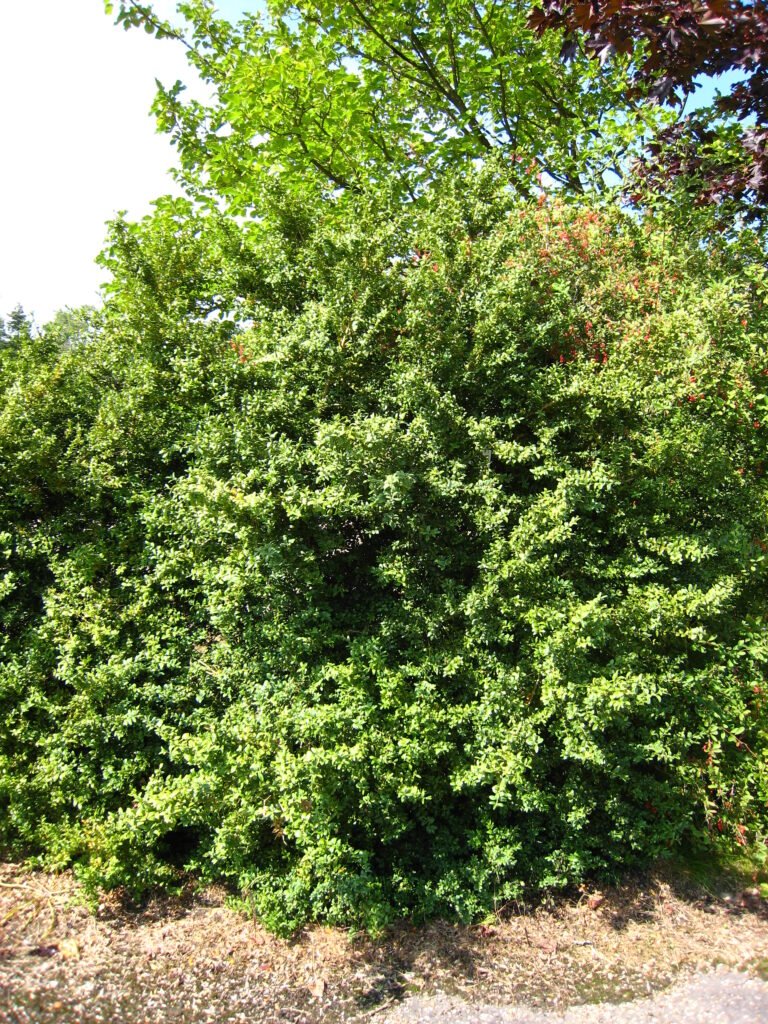
For exposed evergreens, particularly broadleaf types such as rhododendron, holly and boxwood, a burlap screen on the windward side does more good than wrapping the plant itself. Screens block wind while letting air circulate. Wrapping traps moisture against the foliage.
Brown, scorched foliage in late winter is usually desiccation rather than death. Wait until spring growth begins before deciding what to cut out.
Snow, Ice and Structure
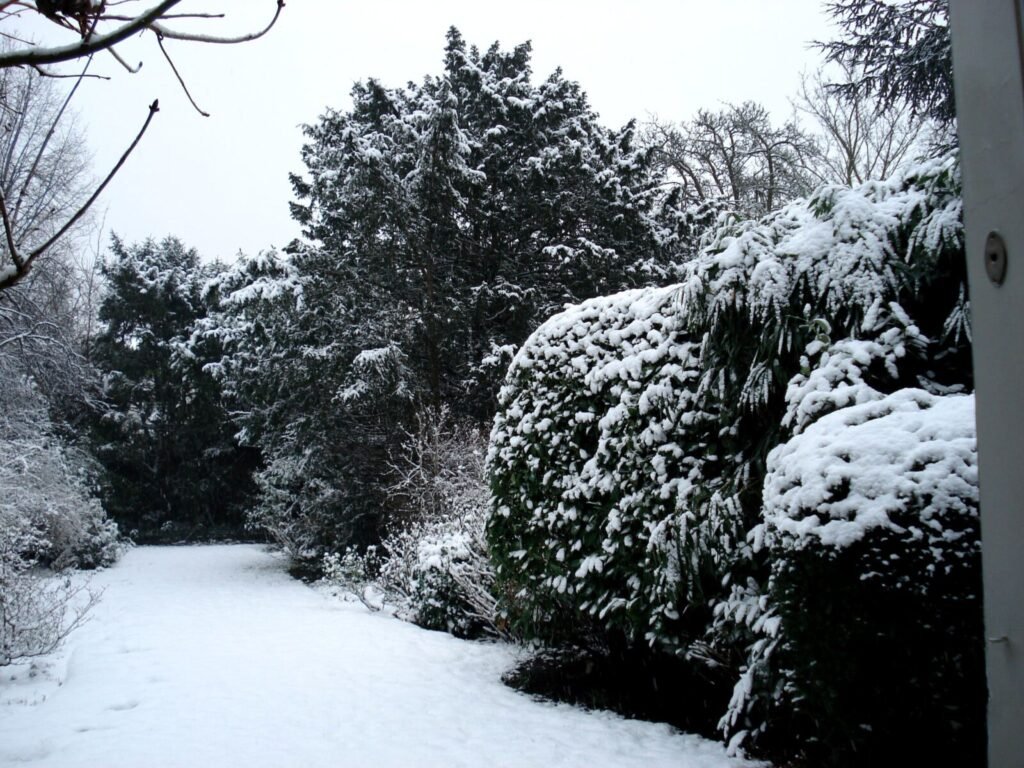
Brush heavy snow off evergreen branches gently with an upward sweep of a broom while it is still soft. Never knock ice off frozen branches, which are brittle and will snap. Let ice melt on its own, even if the plant looks alarming for a few days.
Upright, multi stemmed evergreens such as columnar junipers and arborvitae are prone to splaying open permanently under snow load. Tying them loosely with soft twine in a spiral before winter keeps the form intact.
Keep de icing salt away from beds and lawn edges. Salt spray and runoff scorch roots and foliage, and the damage often does not show until spring. Sand or grit is safer next to planting.
What to Prune in Winter, and What to Leave
Late winter, while plants are fully dormant, is the best time for structural pruning of most deciduous trees and summer flowering shrubs. Without leaves the framework is easy to read, and cuts made just before spring growth heal quickly.
Leave spring flowering shrubs alone. Lilac, forsythia and their relatives set their buds the previous summer, so winter pruning removes the coming display. Prune them right after they flower instead.
Remove broken and damaged wood at any point through winter, since a torn branch is an entry point for disease and a hazard in the next storm.
Leave Some Mess on Purpose
A completely tidy winter garden is a poorer one. Seed heads on coneflowers, rudbeckia, sedum and ornamental grasses feed birds and hold frost beautifully. Hollow stems shelter overwintering insects. Leaf litter under shrubs protects soil life and breaks down into free organic matter.
Clear what is diseased or genuinely collapsed, and leave the rest until spring temperatures are consistently above roughly 50F.
Winter Lawn Rules
Keep traffic off frozen or frost covered grass. Walking on frozen blades ruptures the cells, and the footprints show as brown patches well into spring. Clear leaves and debris before snow falls so nothing is left matted underneath, which is how snow mould gets started.
A Short Winter Checklist
- Water evergreens deeply until the ground freezes.
- Mulch beds after the soil surface has frozen, keeping mulch off crowns.
- Move, group or insulate containers, and raise them off the ground.
- Tie upright evergreens against snow load.
- Brush snow off gently, never ice.
- Keep de icing salt away from beds and lawn edges.
- Prune structure in late winter, but not spring bloomers.
When the ground softens again, our spring garden checklist picks up where this leaves off.
Frequently Asked Questions
When should I mulch for winter protection?
After the top inch or two of soil has frozen, not before. Winter mulch works by keeping soil consistently cold and preventing the freeze and thaw cycles that push plants out of the ground.
Do I need to water my garden in winter?
Established deciduous plants generally do not, but evergreens and anything planted within the last year benefit from a deep watering during extended dry, unfrozen spells.
My evergreen turned brown over winter. Is it dead?
Often not. Brown foliage after winter is usually desiccation from wind and sun on frozen ground. Scratch a small stem: green underneath means it is alive. Wait for spring growth before cutting anything out.