Spider Plant Care Guide: Light, Water, and Easy Propagation
A practical spider plant (Chlorophytum comosum) care guide covering light, watering, brown-tip fixes, and how to propagate the baby plantlets.
My grandmother had a spider plant hanging in her kitchen window for as long as I can remember, and when she passed I took a cutting off it before the house sold. That plant, or rather its many descendants, has been growing in my own kitchen for going on fifteen years now. It’s thrown off so many babies I’ve lost count of how many pots I’ve given away at this point. If you want a plant that basically propagates itself while you watch, this is it.
Spider plant, Chlorophytum comosum, is one of the most forgiving houseplants around, and one of the few where beginners genuinely struggle to kill it even trying. According to Clemson Cooperative Extension’s Home & Garden Information Center, it tolerates a wide range of light and temperature conditions and is one of the easiest houseplants to propagate from the small plantlets it sends out on long stems — exactly the trait that made my grandmother’s single plant multiply into a dozen pots across three households.
Light
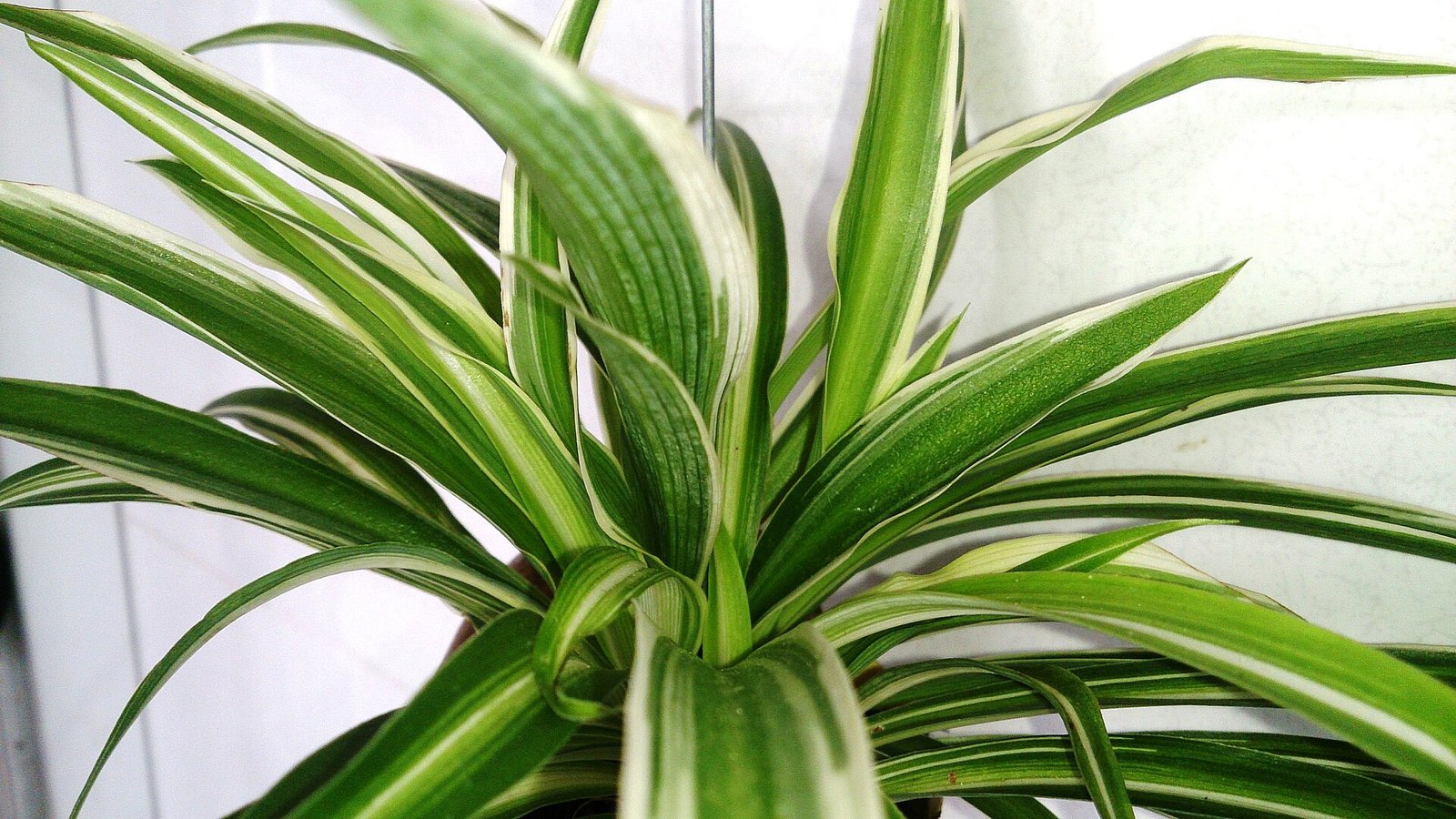
Bright, indirect light gives the fullest growth and the boldest variegation on striped varieties, but spider plants tolerate lower light better than almost anything else I grow — my grandmother’s original plant sat in a north-facing kitchen window for decades. Direct hot sun will scorch the leaf tips, so keep it out of harsh afternoon sun through unfiltered glass.
Watering
Water when the top inch or so of soil feels dry, roughly once a week in the growing season and less often in winter. Spider plants are somewhat sensitive to the fluoride and chlorine in tap water, which shows up as brown tips on the leaves — I switched to using distilled or rainwater on mine years ago and the tip-browning noticeably improved. Overwatering causes root rot, so make sure the pot drains well and never let it sit in standing water.
Soil and Repotting
A standard well-draining potting mix works fine. Spider plants develop thick, fleshy tuberous roots that store water, and they’ll happily grow pot-bound for a while, but once you see roots pushing out of the drainage holes or circling heavily at the surface, it’s time to move up a size. I repot mine roughly every two years.
Feeding
Feed monthly during spring and summer with a balanced liquid fertilizer at about half the recommended strength. Spider plants are sensitive to fertilizer salt buildup, which shows up as brown leaf tips just like the fluoride issue — flushing the soil thoroughly with plain water every couple of months helps prevent this.
Propagation: The Easiest Plant to Multiply
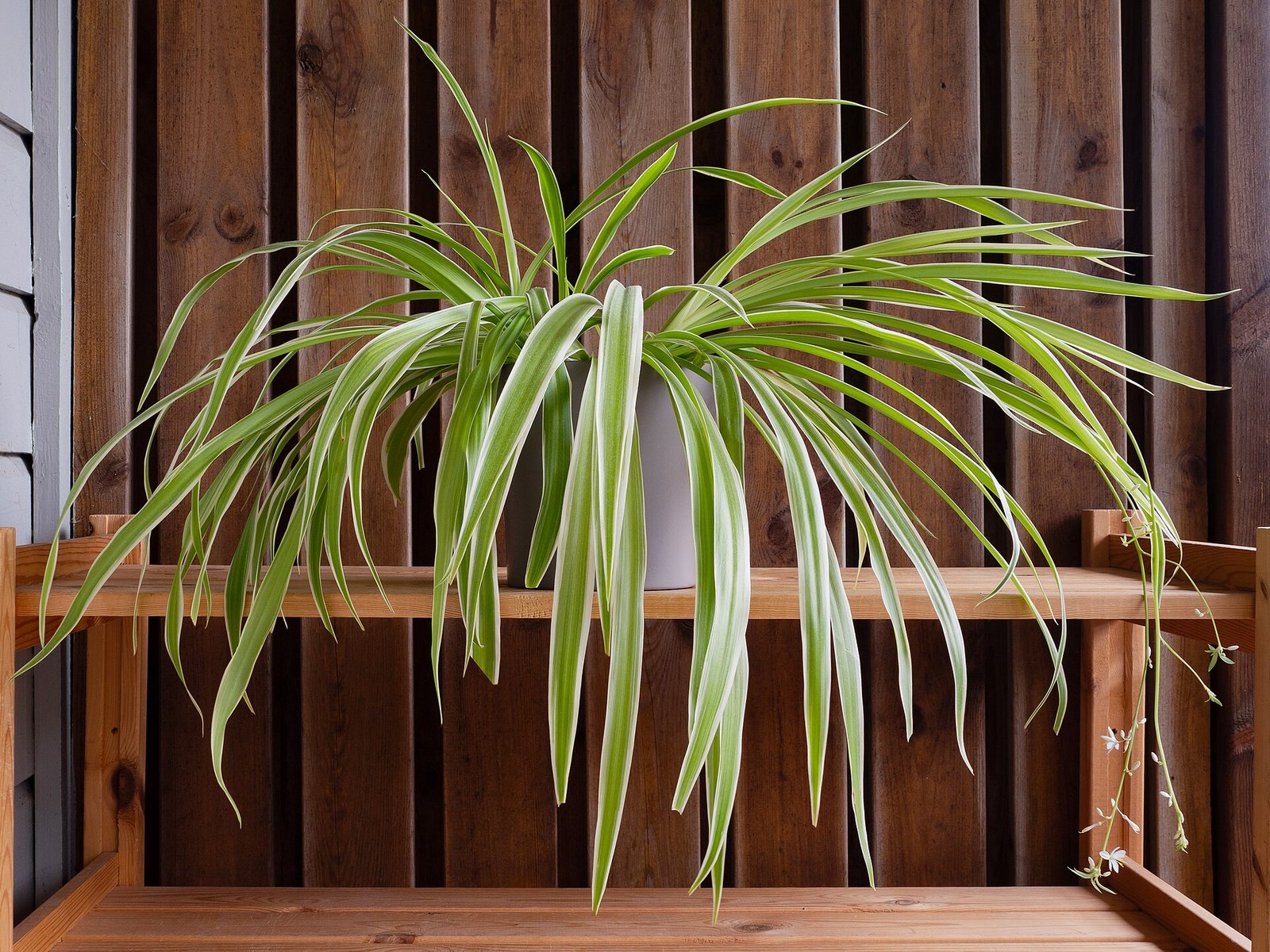
A mature, happy spider plant sends out long stems (called stolons) tipped with small white flowers and then baby plantlets — essentially tiny clones of the parent plant, already partly formed with little aerial roots. Two ways to propagate them:
- Root in water first — snip a plantlet off with a bit of stem attached, and set the base in a glass of water. Roots thicken up within a couple of weeks, then pot it in soil.
- Pin it directly into soil — while the plantlet is still attached to the mother plant, rest it on top of a small pot of moist soil and pin it down with a bent paperclip or bobby pin. Once it roots into the new pot on its own, cut the connecting stem. This is the method I use most, since the parent plant keeps feeding the baby until it’s fully rooted.
Common Problems
Brown leaf tips are almost always fluoride, chlorine, or fertilizer salt buildup rather than a disease — switch to distilled or rainwater and flush the soil occasionally. A spider plant that isn’t producing babies is usually just not mature or stressed enough yet; oddly, plants that are slightly pot-bound tend to flower and produce plantlets more readily than plants recently repotted into a much bigger container. Root rot from overwatering shows up as mushy, yellowing lower leaves and a sour smell from the soil.
Frequently Asked Questions
Why isn’t my spider plant producing babies?
It needs to reach a certain maturity, and often flowers and produces plantlets more readily when slightly pot-bound with plenty of bright indirect light. Patience usually solves it.
Are spider plants toxic to cats and dogs?
They’re generally considered non-toxic, though some cats do enjoy chewing the grass-like leaves, which can cause mild digestive upset. Not dangerous, just best kept out of reach of an especially determined cat.
Why are the tips of my spider plant’s leaves turning brown?
Usually fluoride or chlorine in tap water, or fertilizer salt buildup. Switching to distilled or rainwater and flushing the soil periodically usually clears it up over a few months.
If you want an easy houseplant to hand down, literally, this is the one. Every cutting I’ve given away has taken root in someone else’s home, the same way mine did from my grandmother’s window all those years ago.