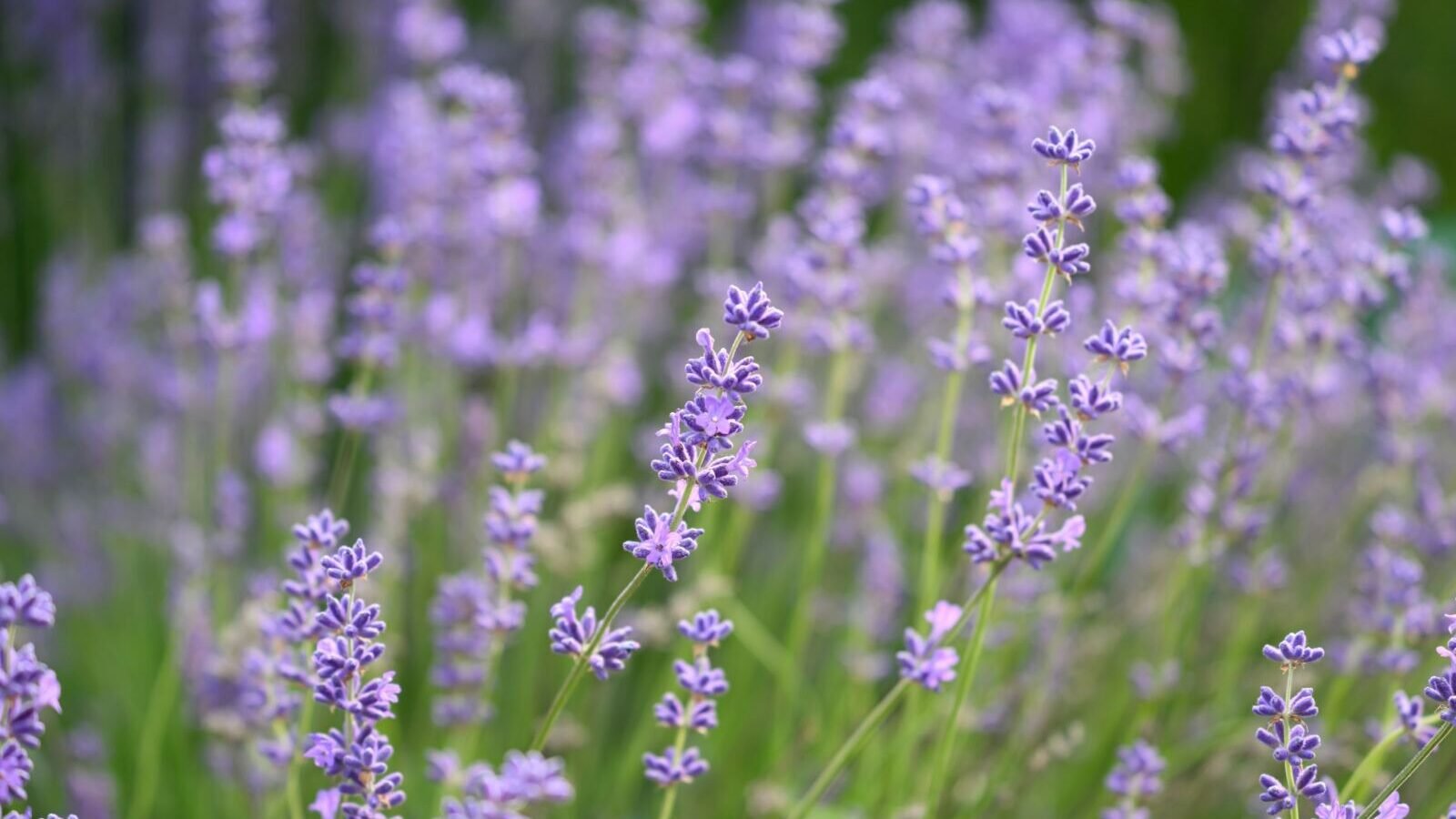
Lavender
Lavender is one of the few plants that genuinely thrives on neglect, as long as you get the drainage right. Most lavender that dies in home gardens does not die of cold or of drought. It dies of wet feet over winter.
Where to Plant It
Full sun, all day. Six hours is the minimum and eight is better. In anything less, plants stretch, flower poorly and become prone to fungal problems.
Soil matters even more than sun. Lavender wants gritty, fast draining ground with a neutral to slightly alkaline pH. Heavy clay is the usual killer. If your soil still holds water a day after rain, plant on a raised mound or in a container rather than trying to amend a whole bed. You can check where you stand with our guide to testing soil pH at home.
Watering
Water new plants regularly through their first summer so the roots establish properly. After that, leave them alone. Established lavender copes with drought far better than it copes with a generous gardener.
Pruning: The Job That Decides Its Lifespan
Prune every year, straight after flowering. Cut back by about a third, staying within the soft green growth. Never cut into the bare woody base. Lavender does not reliably regrow from old wood, and a hard cut there often kills the branch outright.
Skip pruning for two or three seasons and you get a sprawling, woody plant with a hollow centre that no amount of later pruning will fix.
Varieties Worth Knowing
- English lavender (Lavandula angustifolia) is the hardiest, best for cold winters and best for drying.
- French and Spanish lavender flower for longer and carry distinctive petal ears, but they are noticeably less cold hardy.
- Lavandin makes larger plants with heavy oil content, and is the usual choice for hedging.
Which of these survives your winter depends on your zone. Our explainer on USDA hardiness zones covers how to read the number properly.
Common Problems
Woody, bare centre
Years of missed pruning. Replacing the plant is usually faster than rehabilitating it.
Yellowing leaves
Almost always overwatering or poor drainage rather than a nutrient deficiency.
No flowers
Too little sun, or too much fertiliser. Rich soil gives you leaves at the expense of flowers.
The one rule that matters
Sharp drainage beats everything else. Lavender survives cold, heat, poor soil and neglect, but not standing water. If you only get one thing right, make it drainage.
For the full routine including spacing, overwintering and harvesting for drying, see our complete guide to growing lavender.