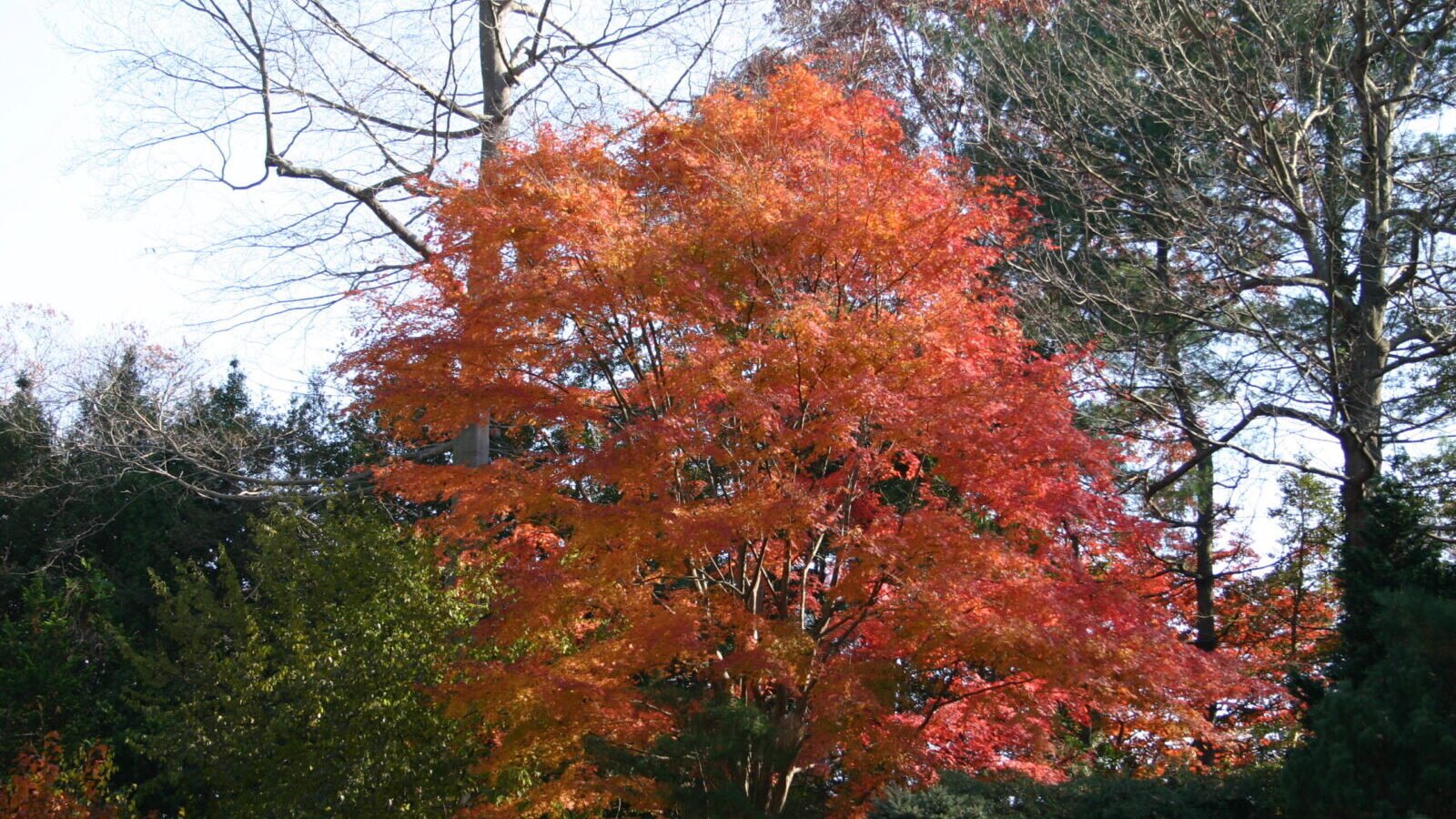
Japanese Maple
A Japanese maple is a slow, deliberate purchase. It grows slowly, it costs more than most small trees, and it will outlive the border you plant it in. Sited well it becomes the thing visitors notice first. Sited badly it spends every summer with crisped brown leaf edges.
Getting the Position Right
Partial shade, particularly shelter from hot afternoon sun. Morning light with afternoon shade produces the best colour and the least leaf scorch.
Wind is the other consideration. The finely cut leaves that make these trees beautiful also dry out fast, and an exposed corner produces brown margins by midsummer no matter how well you water.
Green leaved varieties generally take more sun than red or variegated ones. The finest dissected foliage is the most delicate of all.
Soil and Watering
Moist but well drained, slightly acidic, and rich in organic matter. These are woodland trees at heart. They want the conditions of a forest floor: cool roots, steady moisture, good drainage.
Keep the soil evenly moist, especially for the first few years. A generous mulch layer does most of the work by keeping roots cool and moisture steady, but hold it back a few inches from the trunk.
Pruning: Less Is More
Japanese maples need very little pruning, and heavy pruning ruins their natural shape. Limit yourself to removing dead, damaged or crossing branches, and do it in late autumn or winter while the tree is dormant.
Avoid pruning in spring. These trees bleed sap heavily as growth begins.
Growing One in a Container
Japanese maples take well to large containers, which is useful for small gardens, patios and balconies. Two cautions apply:
- Container roots are far more exposed to cold than roots in open ground. In cold zones, move the pot somewhere sheltered over winter.
- Pots dry out quickly, and this is a tree that does not forgive drying out. Check often through summer.
Before buying, check the variety against your climate using our guide to USDA hardiness zones.
Buy it in autumn
Autumn colour varies enormously between varieties, and photographs on labels flatter everything. Buy while the tree is actually in colour and you get exactly what you saw.
Common Problems
Brown, crisp leaf edges
Leaf scorch from sun, wind or dry soil. Correct the position rather than watering more.
Poor autumn colour
Too much shade, or a variety that simply does not colour strongly in your climate.
Slow growth
Usually normal. Many varieties add only six to twelve inches a year.
For help matching trees and shrubs to the conditions you actually have, see our guide to choosing and growing garden plants.