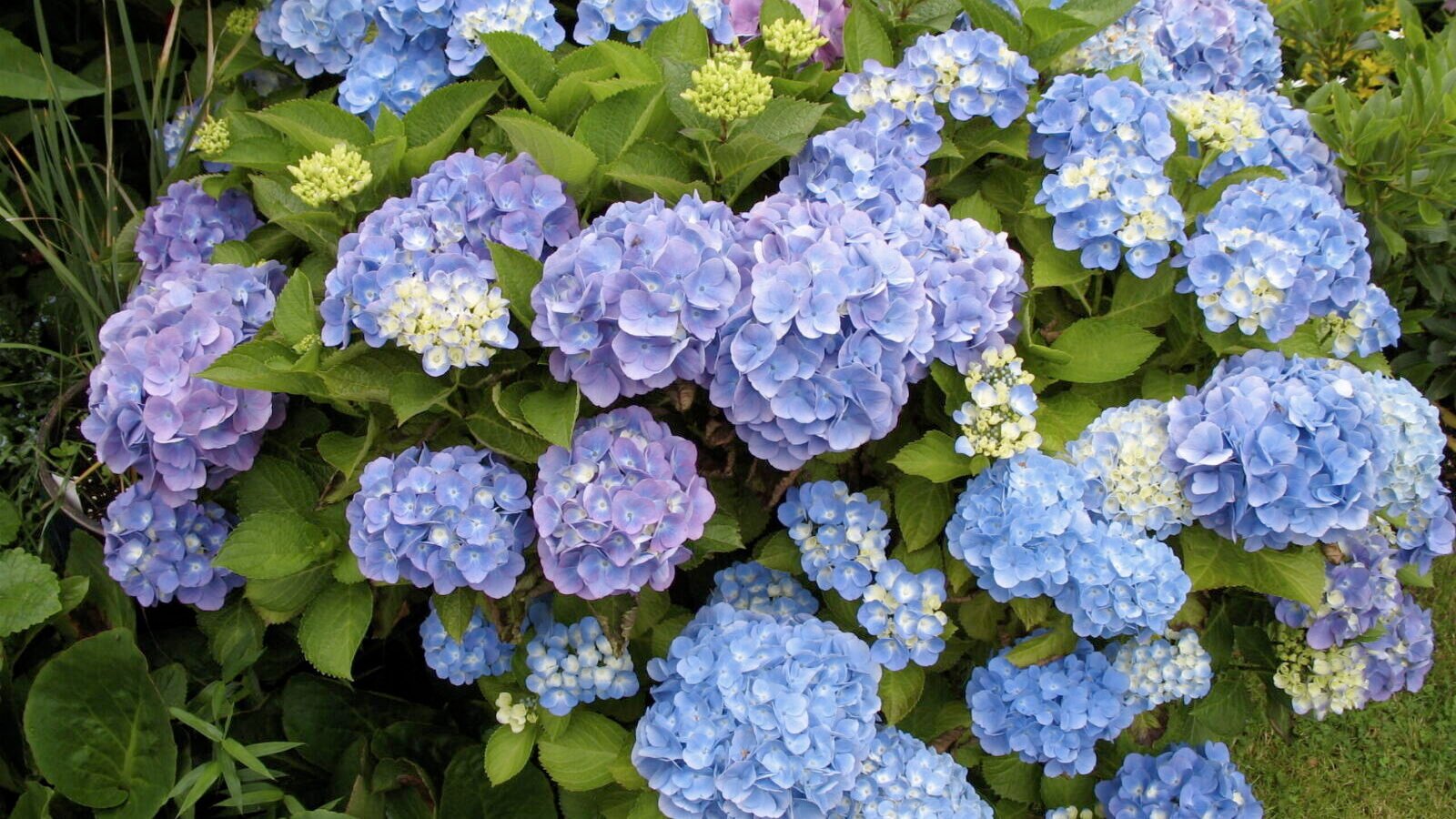
Hydrangea
Hydrangeas give you more flower for less effort than almost any other shrub, and they are forgiving of most mistakes except two: full afternoon sun, and pruning at the wrong time of year.
Light and Position
Morning sun with afternoon shade is the sweet spot. Full sun scorches the leaves and makes the plant wilt dramatically every afternoon, even when the soil is perfectly moist. Deep shade gives you a healthy green shrub with very few flowers.
Shelter matters too. Large mophead blooms catch wind like sails, and an exposed position leaves you with snapped stems after a summer storm.
Watering
The name comes from the Greek for water vessel, and it is earned. Hydrangeas are thirsty, with shallow roots that dry out fast. Water deeply two or three times a week in hot weather rather than lightly every day, and mulch to hold moisture in.
Afternoon wilting that recovers by morning is normal heat stress. Wilting that is still there at dawn means the soil is genuinely dry.
The Colour Question
Bigleaf hydrangeas are the ones that change colour with soil pH, and this catches people out constantly.
- Acidic soil (below about pH 6) gives blue flowers, because aluminium becomes available to the plant.
- Alkaline soil (above about pH 7) gives pink flowers.
- White varieties stay white regardless. No amount of soil tinkering will change them.
Before you try to shift a colour, find out what you actually have. Our guide to testing soil pH at home walks through three methods and how to take a sample that is worth testing.
Pruning Without Losing a Year of Flowers
This is where most hydrangea disappointment comes from. The rule depends entirely on type.
Old wood bloomers
Bigleaf and oakleaf hydrangeas set next year’s buds in late summer. Prune them in autumn, winter or spring and you cut off every flower. Prune these immediately after flowering, and only lightly.
New wood bloomers
Panicle and smooth hydrangeas flower on the current season’s growth. Cut them back hard in late winter or early spring and they flower better for it.
If you are unsure which you have
Do nothing for a full season and watch when it flowers and where the buds form. A year of observation costs you nothing. A badly timed prune costs you a whole season of bloom.
Common Problems
Healthy plant, no flowers
Usually wrong-time pruning on an old wood variety, or a late frost that killed the buds.
Brown, crispy leaf edges
Too much sun or not enough water, often both together.
For help choosing shrubs that suit your conditions rather than fighting them, see our guide to choosing and growing garden plants.