How Often Should You Water Indoor Plants?
This article is one piece of a bigger picture. For the full walkthrough, see our The Complete Guide to Choosing and Growing Garden Plants.
There’s no single safe number of days that works for every houseplant — how often to water depends on the plant, the pot, the season, and the light it’s in. What does work reliably is checking the soil directly before every watering, rather than following a fixed schedule.
Quick Answer
Check the soil 2–3 inches down with a finger before watering, rather than watering on a set number of days. For most common houseplants, that works out to roughly once a week in the growing season and less often in winter — but the finger check should always override the calendar.
Why a Fixed Schedule Doesn’t Work Well
How fast soil dries out depends on several things changing at once: pot size and material (unglazed terracotta dries faster than plastic or glazed ceramic), how much light and warmth the plant is getting, the season, and the specific plant’s natural water needs. A schedule that works in a bright summer window can badly overwater the same plant in a dim winter corner. See our guide to identifying overwatering vs underwatering for how to recognize when a fixed schedule has already gone wrong.
The Soil Check, Step by Step
- Push a finger into the soil up to the second knuckle, roughly 2–3 inches deep.
- If it feels moist at that depth, wait and check again in a day or two.
- If it feels dry at that depth, it’s time to water — regardless of how many days it’s been.
- Water thoroughly until it runs from the drainage holes, rather than a light surface splash.
Checking only the surface is the most common mistake here — surface soil dries out well before the root zone does, and watering based on a dry-looking surface alone is a common route to overwatering.
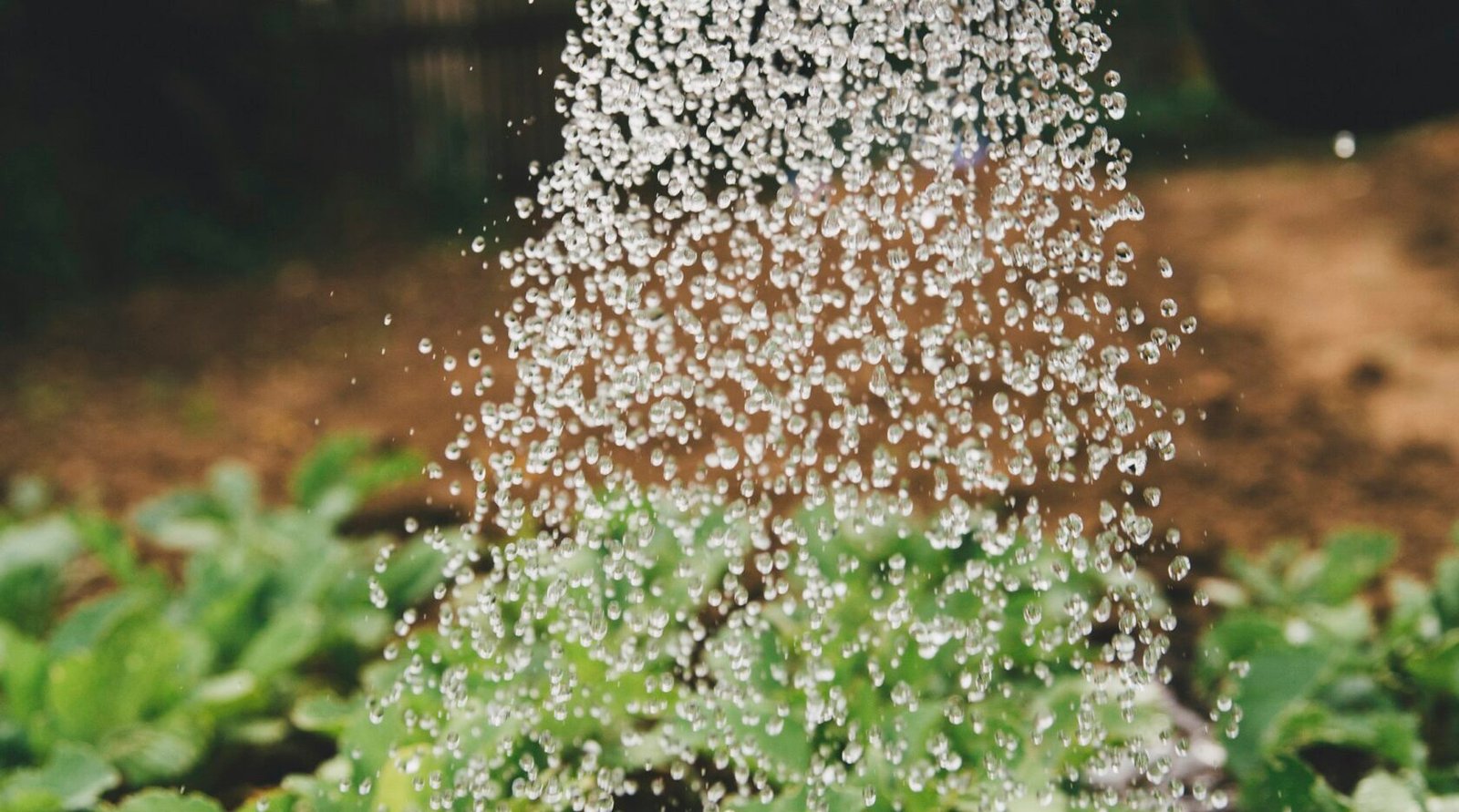
Watering thoroughly until it drains — the correct response once the finger check says the soil is actually dry.
How Watering Needs Change by Condition
Light and season
Plants use more water when they’re actively growing in bright light and less when growth slows in low light or winter. The same plant may need water twice a week in summer and every two to three weeks in winter.
Pot material
Unglazed terracotta is porous and lets moisture evaporate through the sides, so plants in terracotta typically need more frequent watering than the same plant in plastic or glazed ceramic.
Pot size relative to the plant
A plant in a pot much larger than its root system holds excess moisture for longer, which increases overwatering risk. A tightly root-bound plant in a small pot dries out faster and may need more frequent watering.
Plant type
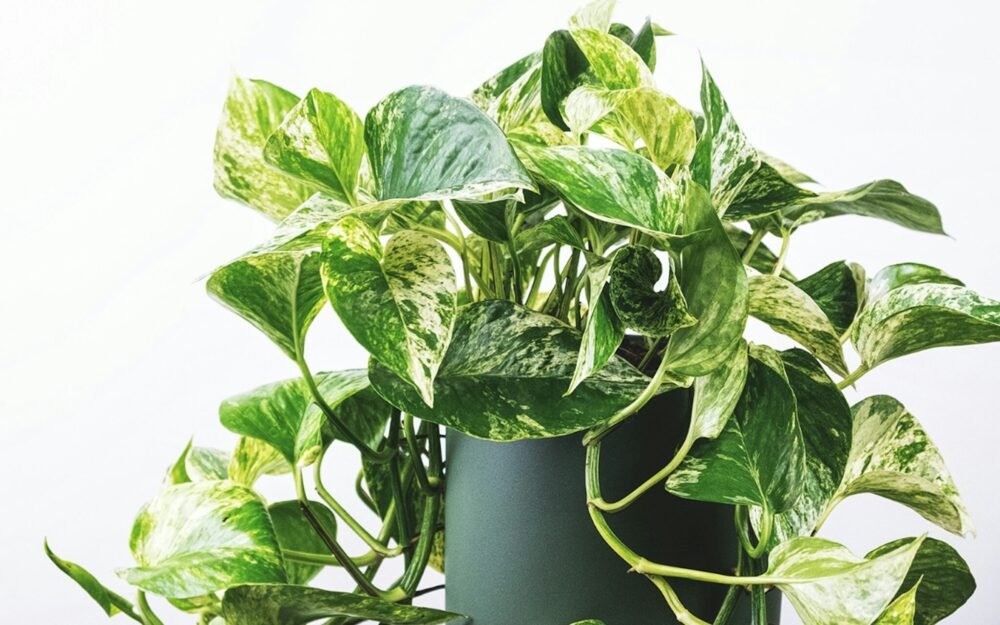
Drought-tolerant plants like snake plant and ZZ plant want to dry out substantially between waterings. Moisture-loving plants like peace lily show visible drooping well before the soil is fully dry. A general-purpose plant like pothos (see our pothos propagation guide) sits comfortably in the middle, tolerating some drying out without much drama.
Signs You’re Watering Too Often or Not Often Enough
- Too often: soil stays wet days after watering, a musty smell at soil level, soft or yellowing lower leaves.
- Not often enough: soil pulls away from the pot’s edge, leaves feel crispy or curl inward, the plant perks back up quickly once watered.
Common Mistakes
- Watering on the same day every week regardless of season or how the plant actually looks.
- Checking only the surface, which dries faster than the root zone and gives a false “needs water” signal.
- Giving a small splash of water frequently instead of a thorough watering less often — shallow, frequent watering encourages roots to stay near the surface.
Frequently Asked Questions
Should I water on a schedule if I travel often?
A self-watering pot or a drip system is more reliable than trying to guess a schedule in advance. If neither is available, water thoroughly right before leaving and choose more drought-tolerant plants for periods you’ll be away.
Does the same finger-check method work for all houseplants?
Yes, for the vast majority of common houseplants grown in standard potting mix. Succulents and orchids are the main exceptions, since they’re grown in different mediums with different moisture-holding properties.
Is tap water safe for houseplants?
For most common houseplants, yes. A small number of species are more sensitive to minerals or chlorine in tap water, in which case letting water sit out overnight before use can help.
Final Takeaway
Replace the fixed schedule with a 10-second finger check before every watering — it accounts for season, light, and pot changes automatically, which no calendar can do. Pair this with our Complete Guide to Choosing and Growing Garden Plants for the rest of the plant-selection basics.

Garden Editors
The editorial team behind Landscape Garden Idea, publishing practical, tested guides on gardening and landscaping.
How we research and write our guides: Our Editorial Policy