Understanding USDA Hardiness Zones
This article is one piece of a bigger picture. For the full walkthrough, see our The Complete Guide to Gardening Tips for Beginners.
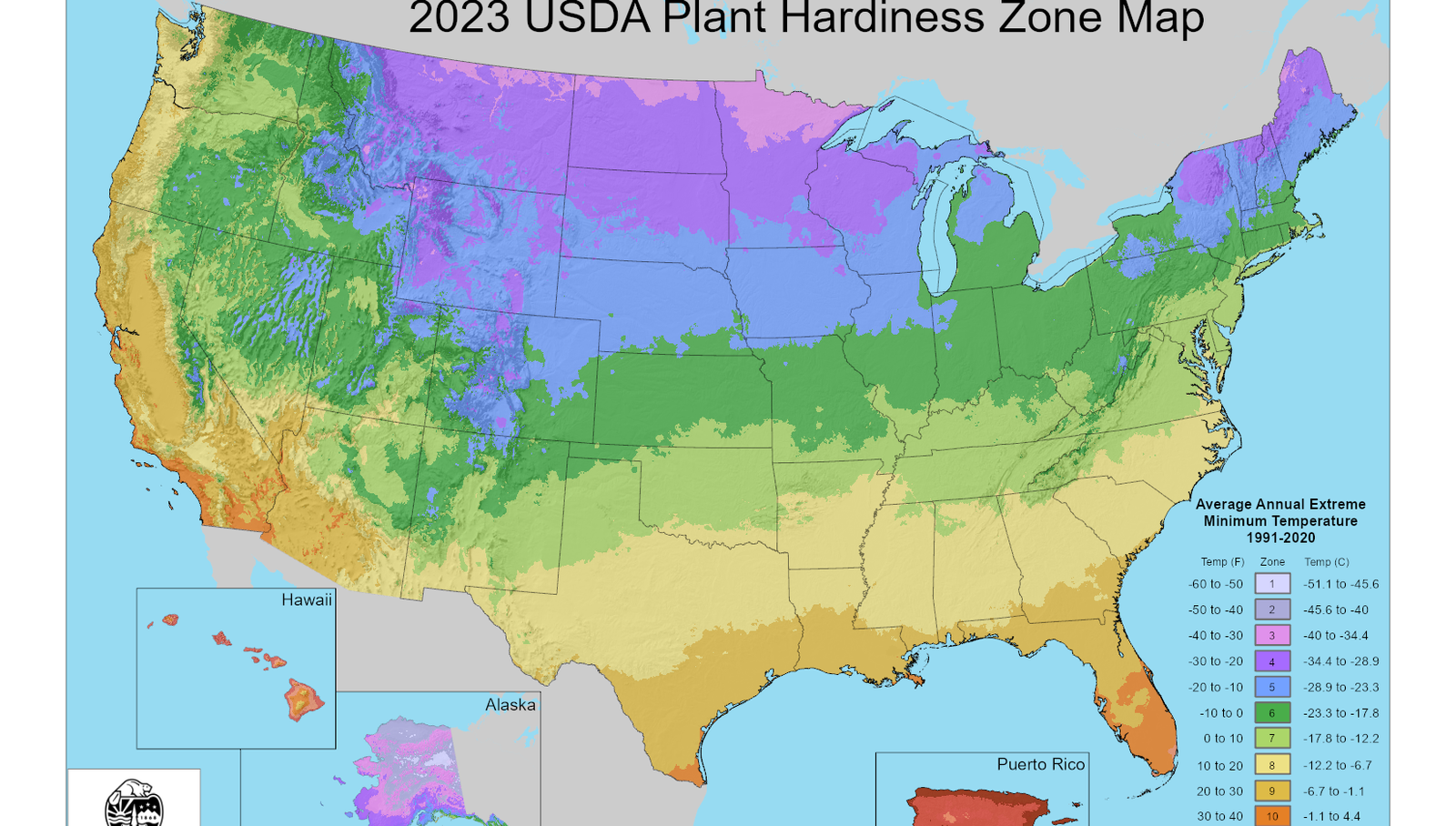
A USDA hardiness zone tells you the coldest winter temperatures a location typically experiences — and it’s the single most important piece of information for deciding whether a perennial, shrub, or tree will survive the winter where you live. Here’s what the zones actually mean and how to use them correctly.
Quick Answer
Find your zone by entering your ZIP code at the official USDA Plant Hardiness Zone Map. Once you know your zone, check any perennial, shrub, or tree’s plant tag or description against it — if your zone falls within the plant’s listed range, it should survive a typical winter in your area outdoors year after year.
What a Hardiness Zone Actually Measures
Each zone represents the average annual extreme minimum winter temperature for that area, divided into 10-degree Fahrenheit bands (further split into 5-degree “a” and “b” half-zones). The current map, jointly produced by the USDA Agricultural Research Service and Oregon State University, covers zones 1 through 13, from the coldest parts of Alaska to the warmest parts of Hawaii and Puerto Rico.
It’s important to understand what this number is not: it isn’t the coldest temperature that has ever occurred at your location, and it isn’t a forecast. It’s a long-term average, meant to describe typical winter cold rather than a single record-setting event.
How to Find Your Zone
The most reliable method is the official USDA tool, which lets you search by ZIP code and returns your specific half-zone. Printed state and regional maps are also available for offline reference. Avoid relying on old zone numbers from packaging or books published before 2023 — the map was updated that year, and some areas shifted by half a zone or more compared to the 2012 edition.
Why It Matters More for Some Plants Than Others
Perennials, shrubs, and trees
For anything meant to survive outdoors year-round, hardiness zone is a genuine pass/fail filter. A plant rated for zones 7–10 will very likely die over winter if planted in zone 5, regardless of how well it’s otherwise cared for.
Annuals
Hardiness zone is largely irrelevant for true annuals, since they’re expected to complete their life cycle and die within a single season regardless of winter cold. What matters for annuals instead is your frost dates and length of growing season.
Vegetables
Most vegetables are grown as annuals and follow the same logic — frost dates and days-to-maturity matter more than hardiness zone, with the exception of a few perennial food crops like asparagus and rhubarb, which do have real zone requirements.
What Hardiness Zone Doesn’t Tell You
A zone number describes winter minimum temperature only. It says nothing about:
- Summer heat — two locations in the same zone can have very different summers, which matters for heat-sensitive plants.
- Soil type or drainage — a plant can be perfectly hardy for your zone and still fail in soil it doesn’t tolerate.
- Sun exposure — zone compatibility doesn’t guarantee a plant will thrive in the light conditions of a specific spot in your yard.
- Microclimates — a sheltered spot against a south-facing wall can run noticeably warmer than the rest of your property, and an exposed low spot can run colder. Zone maps describe the general area, not every specific spot in your garden.
Hardiness zone is a starting filter, not the only factor — pair it with the same plant’s sun, soil, and water needs before deciding where it goes.
Common Mistakes
- Assuming a plant will survive because it’s hardy “down to” a zone lower than yours. Read ranges carefully — some plants have both a cold limit and a heat limit, and a plant rated for zones 3–7 may struggle in zone 9 from excess heat, not cold.
- Ignoring microclimates entirely. A courtyard or a spot against a heated wall can effectively function a half-zone or more warmer than the surrounding area.
- Using outdated zone numbers from older references instead of the current 2023 map.
Frequently Asked Questions
Can I grow a plant rated for a warmer zone than mine?
Usually only as an annual, in a container you can move indoors for winter, or in a particularly sheltered microclimate — and even then, survival isn’t guaranteed.
Do hardiness zones apply to vegetables?
Only to perennial food crops like asparagus, rhubarb, and some fruit trees and berries. Annual vegetables are governed by frost dates and days-to-maturity instead.
Why did my zone change between the 2012 and 2023 maps?
The 2023 update used more weather stations and a longer, more recent data period, which shifted roughly half the country by one half-zone, mostly warmer. This reflects improved mapping methodology and longer-term averages, not a single-year event.
Final Takeaway
Look up your exact zone once, keep it in mind whenever you buy a perennial, shrub, or tree, and treat it as the first filter in plant selection — not the only one. Testing your soil’s pH is another quick early step worth doing alongside this — see our guide to testing soil pH at home. Pair it with our 10 Gardening Tips Every Beginner Should Know for the rest of the beginner framework.
Source: USDA Plant Hardiness Zone Map, USDA Agricultural Research Service and Oregon State University.

Garden Editors
The editorial team behind Landscape Garden Idea, publishing practical, tested guides on gardening and landscaping.
How we research and write our guides: Our Editorial Policy
1 Comment