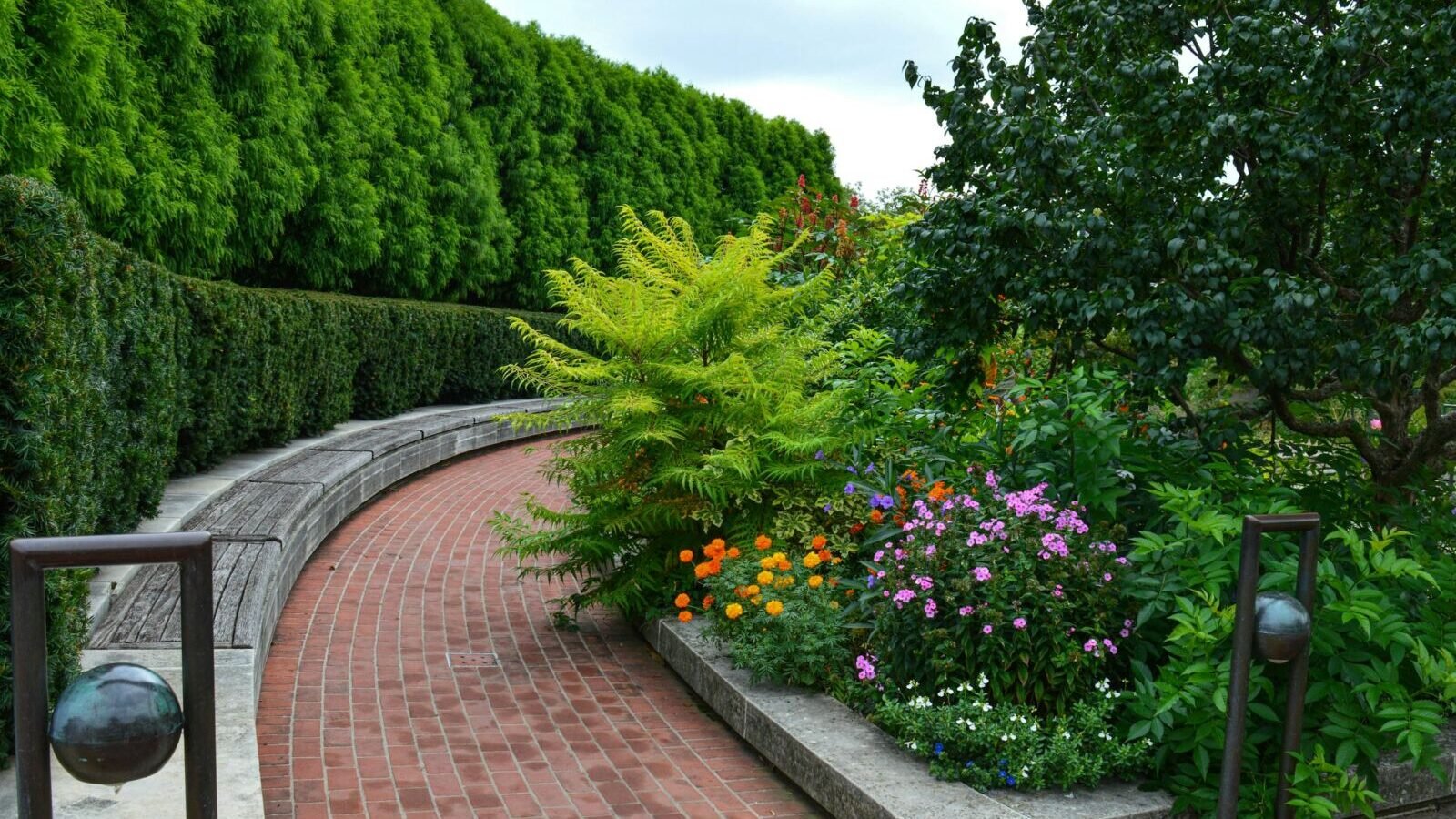
Brick Path Landscaping
Brick paths bring pattern, warmth and a sense of permanence to a garden. What the bond pattern, edging and base actually need to get right.
Table of Contents
Brick is the surface that makes a new path look like it has always been there. It weathers rather than degrades, it carries pattern without shouting, and the colour sits comfortably against planting in a way concrete rarely manages.
Choose the Right Brick
Not every brick belongs underfoot. Standard wall bricks absorb water, and in a freezing climate that water expands and breaks them apart within a few seasons.
Look for paving brick or clay pavers, which are fired harder and rated for ground contact and freeze-thaw cycles. Reclaimed bricks look wonderful but check they were made for paving before committing to a whole path.
The Pattern Sets the Character
- Running bond: simplest, fastest, least waste. Quiet and works almost anywhere.
- Herringbone: bricks interlock at 45 or 90 degrees. The strongest pattern under load, and the most formal looking.
- Basketweave: pairs alternating direction. Distinctly traditional, and very forgiving of slightly irregular reclaimed brick.
- Soldier course edging: bricks stood on end along both edges. Frames any of the above and hides the cut ends.
Herringbone costs the most in cutting and labour. On a narrow path, the cuts at both edges can be half the job.
The Base Decides Whether It Lasts
Almost every failed brick path failed underneath, not on top. Bricks laid straight onto soil sink, tilt and sprout weeds within a season.
You need an excavated trench, a compacted crushed stone base of about four inches for a foot path, a thin bedding layer of sharp sand, then the bricks, then jointing sand swept in and compacted. Our pathway build guide covers the same base preparation step by step.
Edge Restraint Is Not Optional
Brick paving relies on every unit pressing against its neighbours. Without a rigid edge on both sides, the outer bricks drift outward, the joints open, and the whole path loosens from the edges inward. Steel, aluminium, timber or a concrete haunch all work. Skipping this is the most expensive shortcut available.
Let the moss come
Brick looks better with a few years on it. Resist the urge to pressure wash every spring, which erodes the surface and blasts out the jointing sand. A stiff brush and patience keep it looking established rather than scrubbed.